
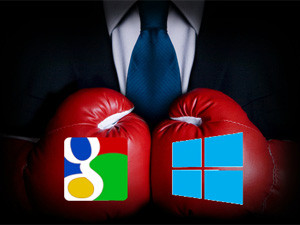
Google caused an uproar on Friday (4 January) among Windows Phone users when the search giant began to redirect them to its search page when they were seeking the mobile version of Google Maps via Internet Explorer.
When it appeared as if Google had made its Maps service unavailable on the Windows Phone 8 platform (despite never offering official support), the company responded with an initial statement saying the service (and its other mobile services) was designed for WebKit browsers, and therefore not IE. Many users, however, claimed they had been able to access the service until Friday, calling Google's explanation into question.
It was also noted that IE 10 for Windows Phone 8 uses the same rendering engine as the desktop version of IE 10, which is able to run Google Maps without any issues.
Amid speculation that Google was acting to hinder the viability of Windows Phone as a platform, the search giant then released another statement saying the redirect was in place purely for performance reasons.
This is a practice that Google has implemented on other platforms such as Opera on iPad. Google said that given the latest updates to IE, it would lift the redirect: "We periodically test Google Maps compatibility with mobile browsers to make sure we deliver the best experience for those users. In our last test, IE mobile still did not offer a good maps experience, with no ability to pan or zoom and perform basic map functionality.
"As a result, we chose to continue to redirect IE mobile users to Google.com where they could at least make local searches. The Firefox mobile browser did offer a somewhat better user experience and that's why there is no redirect for those users.
"Recent improvements to IE mobile and Google Maps now deliver a better experience and we are currently working to remove the redirect. We will continue to test Google Maps compatibility with other mobile browsers to ensure the best possible experience for users," said the Google statement. It would appear as if Google also has no plans to develop native applications for the Windows Phone platform.
Referring to the mixed messages from Google, The Next Web commented: "The redirect and the underlying rendering question are in fact separate issues. Google appears to be conflating the two to obfuscate its motives."
Ecosystem war
The latest debacle comes after Google recently announced it was removing support for Microsoft ActiveSync, affecting the syncing of personal Gmail contacts and calendar for new Windows Phone devices. At the time, Microsoft issued a statement, saying: "Like many, we are surprised and disappointed that Google wants to make it more difficult for customers to connect their accounts to their devices."
VP and deputy general counsel for Microsoft, Dave Heiner, also strongly criticised Google's business practices in a blog post last week: "You might think that Google would be on its best behaviour, given it's under the bright lights of regulatory scrutiny on two continents, particularly as it seeks to assure antitrust enforcers in the US and Europe that it can be trusted on the basis of non-binding assurances that it will not abuse its market position further.
"However, as we enter 2013, that is not the case," said Heiner, adding that Microsoft continues to be "dogged" by an issue it had hoped would have been resolved. "Google continues to prevent Microsoft from offering consumers a fully featured YouTube app for the Windows Phone.
"Google has enabled its own Android phones to access YouTube so that users can search for video categories, find favourites, see ratings, and so forth in the rich user interfaces offered by those phones. It's done the same thing for the iPhones offered by Apple, which doesn't offer a competing search service.
"Unfortunately, Google has refused to allow Microsoft's new Windows Phones to access this YouTube metadata in the same way that Android phones and iPhones do. As a result, Microsoft's YouTube 'app' on Windows Phones is basically just a browser displaying YouTube's mobile Web site, without the rich functionality offered on competing phones."
Taking another swing at the search giant, Heiner said: "Google often says that the antitrust offences with which it has been charged cause no harm to consumers. Google is wrong about that. In this instance, for example, Google's refusal deprives consumers who use competing platforms of a comparable experience in accessing content that is generally available on the Web, almost all of which is created by users rather than by Google itself.
"And it's inconsistent, to say the least, with Google's public insistence that other competing services, such as Facebook, should offer Google complete access to their content so they can index and include it on their search site."
Share

