
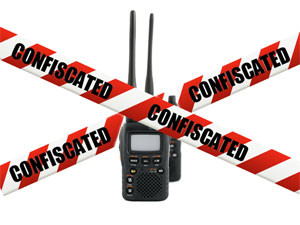
The Independent Communications Authority of SA (ICASA) has denied reports that its inspectors are no longer allowed to seize equipment of operators believed to be making use of radio frequency spectrum unlawfully.
Media reports state the ICASA council made the decision in May, following the seizure of equipment owned by Wireless Business Solutions (WBS) earlier this year.
ICASA spokesperson Paseka Maleka says the reports are incorrect and the council has only determined that seizures be held in abeyance until further notice.
"At the same time, the authority should further engage the defaulting radio frequency spectrum licensees to pay their outstanding licence fees, failing which drastic steps will be taken against such licensees, including, but not limited to, seizure of electronic communication equipment or reference to the Complaints and Compliance Committee for adjudication," says Maleka.
In May, ICASA closed down Amatole Telecommunications Services (trading as Easttel), in East London, after the regulator obtained a search and seizure warrant from the local Magistrates Court against the company.
ICASA said Amatole had failed to pay its annual licence fees in terms of the company's licence terms and conditions from the 2009/10 financial year.
Maleka has confirmed ICASA and Amatole reached an out-of-court settlement this week. "Unfortunately, the authority is not in a position to provide details of the settlement at this stage because the matter is confidential between parties," he says.
In April, iBurst's parent company, WBS, was granted an urgent court interdict in the South Gauteng High Court, which ordered ICASA to return equipment it seized from WBS's premises a few days earlier. The seizure of the radio transmission equipment by ICASA inspectors resulted in the interruption of iBurst and Broadlink services to a number of its subscribers.
In May, documents showed outstanding licence fees to ICASA totalled more than R480 million. This included R189 million owed by the South African National Defence Force.
Botswana punishment
Meanwhile, Botswana's telecoms regulator is clamping down harshly on the sale of counterfeit and uncertified mobile handsets.
The Botswana Communication Regulatory Authority (BOCRA) has reportedly said that, from the end of this month, the selling of fake phones could land the dealer with fines of up to two million pula (R2.35 million) and/or jail terms of up to 10 years.
BOCRA says it has the powers to penalise distributors of cellphones that do not adhere to its safety and quality standards. Retailers are required to show the devices' certification upon request.
The authority reportedly estimates the country had 3.1 million mobile phone subscribers by the end of 2012, a population penetration level of 150%.
Share

