
The basic education ministry has placed ICT as a key priority across all provinces, including connecting schools, addressing teacher skills, and improving mathematics and science performances among SA pupils.
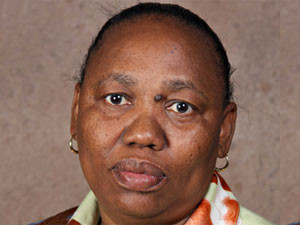
Speaking at a media briefing yesterday, basic education minister Angie Motshekga said education MECs from all provinces pinpointed numerous key objectives in a bid to improve the sector. "The Council of Education Ministers has resolved that ICT is to be one of key priorities for the sector to act as an anchor for the radical transformation of basic education," she said.
She added the Department of Basic Education (DBE) would request assistance from the Presidency with the rollout of its ICT projects. While technology has been identified as a crucial enabler for more efficient education, added Motshekga, its implementation "will require an inter-departmental approach looking at issues of connectivity to implement our vision for 21st century schools".
According to the minister, the DBE is profiling teachers in the education system, looking at their professional information, subjects taught and subjects they are qualified to teach. Around 75% of teachers have so far been profiled and "teacher resource centres are being revitalised with technology resourcing and digital material to provide district level support of teachers".
The DBE says 40 teacher resource centres were activated nationally and 168 staff were trained for those centres during the first three months of the new administration.
Maths, science struggles
Some of the priorities outlined in a recent task team report aimed at improving matric performances - including raising the pass mark to 40% and making mathematics available at all schools - would be achievable in the short- to medium-term, while others will be deliberated further. Although Motshekga was not specific about which targets would be sent back to the drawing board, she said they would be discussed further at a provincial level.
"The department presented work in progress on a revised maths, science and technology (MST) strategy that sets out clear targets for increasing the uptake in pure mathematics by learners. The MST office is now fully operational and the department is looking at ways to better utilise the Dinaledi and technical grants to benefit more learners in resourcing MST education," said Motshekga.
Electronic marking of matric exams was earmarked as a long-term priority, although no specific deadlines were set.
Share

