
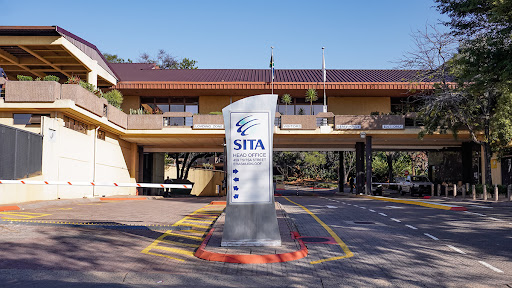
Procurement irregularities, inconsistent consequence management and irregular expenditure are among the identified challenges that handicap the State Information Technology Agency (SITA).
This is based on an investigation report commissioned by communications minister Solly Malatsi in December 2024. He requested the Public Service Commission (PSC) to probe a range of governance issues affecting the embattled SITA.
An entity of Malatsi’s Department of Communications and Digital Technologies (DCDT), SITA sits as a central pillar of government's IT procurement. It is responsible for developing, operating and/or maintaining ICT services consumed by government departments.


The entity supports over 100 government departments and public entities, ranging from providing network services, enabling cloud services for departments and other applications.
However, it has been constantly plagued by wide-ranging challenges over the years, as well as prolonged gaps in executive leadership.
On Monday, the PSC formally handed over the report to Malatsi and jointly briefed the media on the outcomes of the investigation.
Addressing media, PSC chairperson professor Somadoda Fikeni said SITA was functioning but limping forward. He highlighted that the leadership churn – where there was continuous board and management changes coupled with ministerial changes – created instability.
As a result, there needs to be fierce urgency in terms of timelines and turnaround of SITA, to ensure the entity is globally competitive and embarks on digital transformation, said Fikeni.
The PSC’s report, which spans the period between 2020 and 2025, identified “systemic, cross-cutting and mutually-reinforcing weaknesses” in SITA’s governance environment, revealed Malatsi.
It found that while many of SITA’s policies appeared adequate on paper, they too often failed in practice because of poor implementation, instability, weak oversight, incomplete records and insufficient consequence management.
These, he said, created an environment in which poor decisions, delays, weak accountability and corruption risks could take root.
However, Malatsi underscored that it does not conclude that every transaction, appointment or decision at SITA was irregular.
Among the most serious findings is R2 billion in irregular expenditure flagged by the Auditor-General of South Africa across four audited years: R819.7 million in 2020/21, R285.5 million in 2021/22, R452 million in 2022/23 and R514.171 million in 2024/25. The investigation found insufficient evidence that consequence management was consistently applied in relation to these matters.
The investigation also found that one in four tenders analysed did not result in an award. Out of the 1 443 concluded procurement matters reviewed, 278 were withdrawn, 52 were cancelled and 34 were closed with no recorded reason, representing an attrition rate of 25.2%.
About 529 procurement matters remained open in the pipeline, with the oldest matters sitting in adjudication and contracting for an average of more than 400 days.
In addition, a total of 203 procurement matters took longer than a year from work order to outcome.
Malatsi said the release of the report is about transparency, accountability and delivery. “SITA is the state’s central ICT engine. When SITA fails, departments wait longer for the systems they need, budgets are placed under pressure, and citizens ultimately experience the consequences through poorer public services.
“The value of this report is that it does not leave us with vague concerns. It gives us a clear diagnosis, a set of practical reforms and hard deadlines. The era of drift at SITA must end.”
In terms of SITA’s executive committee, the agency’s MD Magatho Mello noted that the report points to gaps in the executive leadership that need to be filled.
Mello also stated it is his view, shared by the board, that SITA still has a responsibility to be an enabling partner for government.
“The evolution of SITA has been stunted because of the challenges shared in the report, which are the same as those discussed with the board and board’s chairperson. We understand that the organisation must evolve rapidly, which is a challenge and path we are on.”
Reform agenda
According to Malatsi, the report = highlighted a need for a formal review of SITA’s mandate and operating model, which is already underway and led by the DCDT.
A study on the repurposing of SITA will inform how the institution is positioned moving forward, he said. The review will consider whether legislative, policy or operational reforms are required to ensure SITA is fit for purpose in a modern digital state.
To ensure the report becomes a reform instrument, the minister and the PSC has agreed on several immediate actions:
- First, the SITA board must submit a board-approved stabilisation and recovery plan to the minister within 30 business days.
Second, SITA must produce a verified procurement backlog baseline within 30 business days, benchmarked against the investigation data, so that progress can be measured transparently and cannot be overstated.
Third, SITA must submit a governance reform plan within 60 business days, including measures to strengthen board administration, record keeping, delegations, procurement controls, contract management and executive accountability.
Fourth, SITA must provide quarterly governance-health reports to the minister, including progress on procurement turnaround times, backlog reduction, contract-register integrity, implementation of audit findings and consequence-management matters.
Fifth, SITA must establish a consolidated consequence-management framework. Every irregular expenditure item, disciplinary matter and prior investigation finding must be registered, allocated to an accountable owner, tracked and closed only with evidence. Criminal or high-value matters must be escalated to the appropriate authorities without delay.
Sixth, reforms may not be closed on management’s assurance alone. Their effectiveness must be independently validated and reported to the minister.
Share

