
More than R2.8 million was paid out in bonuses to Department of Communications (DOC) employees in the past financial year, despite the department achieving a mediocre 54% performance rating.
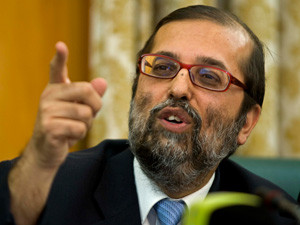
This was revealed by minister Yunus Carrim in response to a Parliamentary question posed by Democratic Alliance (DA) MP John Steenhuisen. In his reply, Carrim says R2 803 047 was paid in cash bonuses to 167 employees. Carrim emphasises that senior management staff did not receive bonuses, but says "it would not be fair to disadvantage employees who are fulfilling support functions" in the department.
Last month, a skills audit conducted by the DOC showed the average performance rating of directors, deputy-directors and senior managers in the department has been approximately 50% for the past three financial years. Carrim pinned the rating on "complexities and delays associated with key projects that were set to be achieved in the strategic plan of the department".
Anton Alberts, Freedom Front Plus Parliamentary spokesperson, says the DOC bonuses form part of a tendency to award mediocrity and poor service. "The department does not even deserve a 54% performance rating. They basically did nothing.
"[The DOC bonuses] are also an indication that the ANC does not have respect for the taxpayer, because firstly, valuable funds are wasted on mediocre and poor government officials, and secondly, poor services are delivered to the taxpayer."
Alberts also notes he does not understand the context of Carrim's statement that it would be unfair not to pay bonuses to employees who fulfil support functions in the department. "I know that bonuses were paid to senior managers who do not deserve it. In principle, we believe that a bonus system should be implemented for all employees on all levels who truly perform. The criteria and review should, of course, be objective and not based on political or personal prejudice."
DA shadow minister of communications Marian Shinn says while the department's performance rating is worrying, she feels the bonuses paid are justified. "No bonuses were paid to the executive managers. The staff who received bonuses are the ones who were sort of doing two or three jobs at once and taking on responsibilities when there was a desperate shortage of staff.
"I think there was a lack of direction from the minister [Dina Pule] at the time, causing the department not to be as productive as it should have been."
Inkatha Freedom Party MP Liezl van der Merwe says there are no valid excuses or explanations for paying performance bonuses when targets were not met and when performance levels are as low as 54%. "It is unacceptable and should under no circumstances be allowed. I still contend that performance bonuses must be linked to targets achieved and exceptional performance. Performance bonuses should not be used as a tool to reward mediocrity."
She points out that when taken into account that an increase in broadband penetration is linked to an increase in the country's GDP, it is "astonishing" that more effort is not made to reach SA's broadband penetration targets. "Real ICT development can only be achieved when there is real accountability, passion and commitment from the staff, management and leadership at DOC."
Performance boost
In Carrim's progress report to the portfolio committee on communications, released yesterday, he mentions various efforts made to improve the department's dire performance.

This includes management training for managers as from Friday, migrating 80% of employees into a revised organisational structure, and finalising all outstanding labour matters.
Other efforts include finalising DGs' performance agreements, short-listing candidates for the CFO position, and promising that 40 non-senior management services positions and eight critical non-senior management services positions will have been advertised by mid-December.
The report also states that, as part of contributing to a less fractious and fragmented ICT sector, Carrim has engaged with over 180 organisations and individuals, and mediated or arranged for mediation in several cases of differences between stakeholders.
"Several workshops and meetings have also been held bringing stakeholders together, including on such issues as cost-to-communicate, spectrum and digital migration," says the report.
Share

