
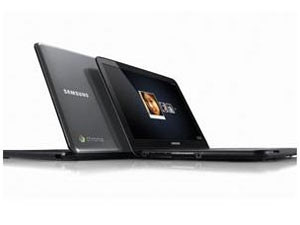
Over 1 300 South African consumers gave their laptops a customer satisfaction score of 75.1 out of 100 in the latest South African Customer Satisfaction Index released yesterday - four points lower than last year.
The laptop brands included in the index were Acer, Dell, Hewlett-Packard (HP), Lenovo and Samsung, selected by market share. Dell emerged as the industry leader, while the other brands reported satisfaction scores on par with the industry average.
"There is little differentiation among the various laptop brands from a customer satisfaction point of view and only one brand scored higher than the industry average," says professor Adr'e Schreuder, founder and chairperson of the index.
When compared against other industries, laptops had a relatively low rate of complaints, says Schreuder. He adds that specific grievances raised by South African customers included a short battery life, hard drive and hardware problems, screen issues and freezing or slow machines.
Data for this study was collected between April and June 2014, using both telephonic and Web-based surveys, and each of the brands recorded a lower satisfaction score than last year.
"The proliferation of tablets has probably contributed to the decline in customer satisfaction as it has in the US," explains Schreuder. "Before tablets came on the scene, laptops received higher user satisfaction ratings than desktops, because, at that stage, the laptop was the tablet.
"But now, the laptop falls between the traditional set-up of a desktop and the 'carry-everywhere' tablet. For the industry, the next wave could come from products that bridge the gap by marrying the functionality of the desktop with the ease of use and portability of the tablet."
Relative to the international American Consumer Satisfaction Index scores, SA's laptop industry score is slightly lower than that of the US (79) which serves as the international benchmark.
Schreuder expresses concern about the relative lack of differentiation among the top brands. "Price sensitivity appears to be a major influence as brand loyalty is relatively low in this industry. If we follow the trend in the US, we may just see a surge of satisfaction with PCs as customers feel their expectations are not being met by laptops and tablets," he said.
Handset satisfaction
Another recent study by the South African Customer Satisfaction Index found the mobile handsets sector in SA received an overall satisfaction score from its customers of 73.3 out of 100.
The handset manufacturers measured were Apple, Samsung, Nokia, BlackBerry and a category of "other brands" based on market share. Apple, Samsung and "other brands" are the industry leaders, Nokia scored on par with the industry and BlackBerry scored significantly lower than the industry average, reflecting the company's decline worldwide, says the study.
"Samsung has improved its customer satisfaction since last year and it has done so in other markets as well. In the US, Apple sells nearly twice the number of smartphones than Samsung, yet Samsung came out on top this year in one critical metric - customer satisfaction. In SA, Samsung shares the customer satisfaction leadership position with Apple and other brands," says Schreuder.
"BlackBerry's overall satisfaction score has declined further since last year and it is now recording one of the lowest scores we have seen for customer satisfaction in SA."
Schreuder believes Apple has a reputation for good quality, but its product refresh cycles seem really long while new Android phones seem to be released much more often.
"The lower overall industry score is driven by lower perceived value - handsets are getting more expensive and customers are questioning the amount of added value they get from next-generation phones. They appear to be wondering if it is warranted to pay much higher prices for very similar functionality," he says.
Schreuder adds there is a growing understanding among customers that smartphones are data-hungry, whereas previously they tended to blame the networks for high data charges. "The main complaints customers specified centred on battery life, freezing operating systems and high data usage."
Share

