

The focus of IT organisations in the future will be on software and communication systems that will enable the Internet of everything, and prices for these solutions are expected to fall rapidly. This is according to Peter Sondergaard, Gartner global head of research.
Speaking at the opening of the Gartner Symposium today, Sondergaard says by 2017, 20% of computers will be learning rather than processing. In addition, at least 10 activities potentially injurious to human life will be done by smart machines by 2024.
"Smart devices are taking over the world," he says. In 2009, there were 2.5 billion "things" that were connected, while in 2020, there will be 15 billion to 30 billion things that are connected, predicts Gartner.
The largest and fastest growing technology markets will be the consumer technology markets, because they chase fashion, says Sondergaard. "Waves of new devices come quickly, and only a few will stick around for a while." He says, by 2017, 83% of device purchases will be mobile phones, tablets and ultramobiles. "Nearly half of first-time computer purchases will be a tablet by 2017. Every worker will have a business use for their smartphone."
Tom Scholtz, VP and Gartner fellow, says the consumer has come to trust in a digital world that he can't see. "The Internet of things will become just as active as humans are today," he says. "A human can talk to a thing just as easily as a thing - such as a building for example - can contact a maintenance worker. It's a human-to-machine and machine-to-human world."
This brings another dimension to business processes, says Scholtz. Digitalising business processes will be something everyone does to compete, and yet something that has to be done. He notes that the Internet of everything means that competitors "that have no business being in your industry, will now be changing your industry". As an example, he notes that Nike, a company that traditionally operates in the sporting industry, is now playing on the edges of the health industry with its wearable fitness devices.
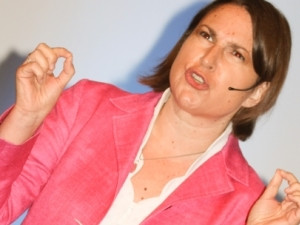
No industry will remain unaffected, says Alexa Bona, VP and analyst. "Huggies now manufactures TweetPee, a nappy that alerts a mobile phone when your baby needs changing," she says.
"Autonomous trucks being used in the mining industry are more efficient than those being driven by actual drivers, require less maintenance and are safer."
Every industry will be changed by the Internet of everything, she says. "Your biggest opportunities and your most threatening competitors will be business processes, business models and business moments."
Share

