
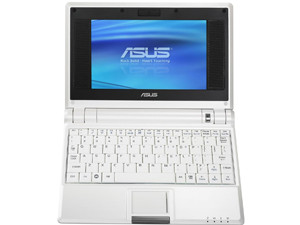
Acer and Asustek, the last major netbook vendors, have discontinued their netbook product ranges, bringing an end to the five-year era of the modern netbook, which began with the Asus EEE PC in 2007. Digitimes leaked the companies' plans in September last year, with confirmation coming in late December.
Other vendors cancelled their netbook products earlier. In December 2011, Dell announced it would exit the netbook space, focusing on more powerful ultrabooks. Lenovo left the party in February 2012, and Toshiba followed suit in May, leaving Asus and Acer as the remaining major suppliers.
Although ultra portables predate the netbook era, Asus started the modern netbook with the introduction of the EEE PC, a device specifically engineered to reduce cost and maximise portability. The EEE PC set the tone with many hardware compromises, including small solid state drives, small screens, and a free Linux operating system.
The product sold well despite its many compromises, and improved models quickly began to take market share away from low-end notebook models, attracting the attention of other manufacturers and resulting in a flood of new machines.
But the market preference for Windows applications meant feature creep set in almost immediately: drives were expanded to larger, spinning disks; processors and memory were upgraded; and battery life suffered. As prices rose, netbooks began to find themselves competing closely with entry-level notebooks, which offered more attractive hardware, such as larger screens and optical drives.
Then ultrabooks received a sudden rise in appeal with the introduction of the Apple Macbook Air in 2008, and many notebook vendors hitched their wagons to Apple's marketing train. Ultrabooks, with their high prices, did not hurt netbook sales much - it was the tablet market, also effectively reinvented by Apple in 2010, which really gave consumers a more attractive alternative for low-cost, highly portable computing. The rest is history: the tablet market has ballooned, while the lowly netbook's niche has shrunk.
Some manufacturers have positioned products in a midpoint - netbook pioneer Asus has gradually shifted its EEE brand to include tablets, including the Transformer range, which includes a dockable keyboard to fill the netbook niche.
While the netbook may be dead, Amazon lists Samsung's Chromebook - a netbook running Google's ChromeOS operation system - as its top-selling notebook model, ahead of the Macbook Pro in second place.
Share

