

As 2012 draws to a close, so does ITWeb's news coverage for the year. Of the thousands of stories we've published since January, a handful of really big stories emerge as particularly important, either because of their immediate impact, or because of the deeper influence they are having within the industry.
It's impossible to write a roundup of every story, but here are several which we thought carried the most weight, based on their impact at the time, or their implications for the industry in the long term.
Red shoe diaries
Telkom probably deserves top spot in this list. A potential tie up with Korea's KT Corporation was scuppered by Cabinet, via minister of communications Dina Pule, whose own Red Shoe Diaries didn't help her perception in the marketplace - she scored an "E" on the DA's cabinet scorecard. But that's not all, the minister also threw a spanner into the works at Telkom's board, blocking the reappointment of several key executives and leading to yet another CEO resignation, this time Monbulelo "Pinky" Moholi, who was generally well-regarded by the industry. The parastatal also lost Deon Liebenberg as the head of Telkom Business Mobile - he moved to Vodacom. All this followed by awful financial results led to ratings agencies lowering Telkom to the lowest investment grade of BBB-, just above junk bond status.
The DOC is also trying, yet again, to thrash out a national ICT policy framework, and hosted a(nother) colloquium early this year. Much talk, no action? Meanwhile, other African countries are focusing heavily on the competitiveness of their emerging tech sectors. Kenya crowed when IBM opened its 12th global research lab in Nairobi.

Local mobile telecom news was more heartening. A mobile price war erupted, kicked off by new Cell C CEO Alan Knott-Craig, who slashed prices across the board, prompting scrambled responses by the other operators. Several to-and-fro reductions followed, suggesting that we will see more of the same in the new year. With international calling now under R1 a minute and mobile data as cheap as 2.5c/mb, mobile users are reaping the benefits of the market disruption. One other story stood out - MTN's spat with Turkcell over claims the South African operator bribed its way to a lucrative Iranian mobile licence.
Knott-Craig's son, Alan Junior, also made headlines after precipitately departing Mxit after just a year at the helm. Mxit is reinventing itself, purchasing locally developed social platform Motribe and planning new products, but also losing its CEO and undergoing a round of retrenchments. How Mxit will emerge in 2013 is unclear.
It's not just margins under pressure: the mobile operators are having a tough time with spectrum, needing a reallocation to take advantage of high-speed LTE networks, which are just starting to roll out nationwide. Embattled ICASA has not managed to get the spectrum issues resolved, which has played out in close lockstep with another major story this year - the migration to digital TV. SA is badly behind with its plans to deploy digital TV, with much confusion over set-top boxes, regulations, funding, and the rest.
E-tolling was a consistent headline throughout the year, with the latest being Sanral's win in court, despite many lingering questions about the project's cost, inefficiency, and possible contract backhanders. This story will run and run, possibly measured in R/km.
Tech brownie points
Other stories in the news... SA scored international tech brownie points by winning (most) of the SKA radio telescope project. CERN may have found the Higg's Boson. Nasa landed another robot on Mars. The Web turned 21 and, like every young adult, immediately became the focus of a slew of inconvenient laws. Attempts to regulate the Internet really kicked into high gear in 2012, resulting in widespread Web blackouts in protest until lawmakers and their entertainment industry paymasters backed down. Now it's the ITU's turn to meddle, hosting discussions around government control of the Internet.
Mobile prices came down, and local bandwidth went up. The WACS undersea cable was the latest international fibre link to become operational, adding a major chunk of bandwidth to SA and other African countries. And more are on the horizon, which is a good thing since SA's Internet user base is estimated at 18 million - over a third of the population.
Banking also grabbed tech headlines. Most of the major banks (c'mon Absa!) now have mobile apps in the market and all of them are pushing into new areas like mobile payments, contactless payments, and financial management services. That last topic thrust unceremoniously into the limelight when 22seven ambushed the banks with a third-party product, driven by an international partner, scraping data from the banks' unsuspecting Web services to deliver added value to users. The banks scurried to respond, block (c'mon Absa!), or compete with 22seven, proving once again that disruption and innovation go hand in hand.
International news - the usual suspects
Internationally, a handful of big stories have really grabbed our attention and will hold it into 2013 as the stories continue to unfold.
Apple dominated the headlines this year, both good and bad. If one defining story sticks out, it must be the ongoing legal battles with Samsung and, well, most of the rest of the industry. Apple came out ahead in 2012, winning a billion-dollar judgement against Samsung and having several competing products banned from sale. It turns out Steve Jobs wasn't kidding about "going thermonuclear" on Android. But those victories could be short lived, with most decisions under appeal, several patents overturned, and widespread call for general reform. Don't hate the player, hate the game, is the cry - Apple is just the highest-profile example of a very messy technology patent litigation market, in which ultimately it's the lawyers who win and the consumers who lose.
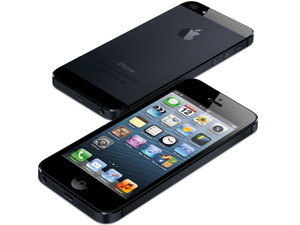
Apple had some outright good news - it became the world's most valuable company, and its iPhone business makes more money than all of Microsoft combined. Some was mixed - its iPhone 5 and iPad Mini launches were less rapturously received than previous versions. And its Maps software debacle was just outright nasty.
The target of Apple's ire, Google, wasn't as newsworthy. Android won a majority position in smartphone market share (the iPhone 5 has taken that spot back for now), Google Glass broke cover, and various Nexus-branded devices were released. For a company the size of Google, it hasn't had the most headline-grabbing year.
Microsoft, meanwhile, had a very big year indeed, despite some financial wrinkles: it declared its first ever quarterly loss courtesy of a hefty one-off write-down, and "I'm bigger than Microsoft" is becoming something of a Silicon Valley party game for Apple and Google pundits. But several major enterprise products hit the streets, including Office, Windows Server 2012 and SQL Server 2012. Microsoft also stirred the clouds a bit, with the revamped SkyDrive and the migration of Hotmail to Outlook.com. But the big news was all about Windows 8, with the controversial interface previously known as Metro, and with it the major push into smartphone and tablet computing. Windows 8 phones have been well received but haven't yet managed to get much traction or market share. The tablet space has yet to gather steam, with Microsoft's own Surface tablet alongside many OEM brands, running a mix of stripped-down ARM Windows 8 RT versus full-blown Windows 8, which may not help its positioning. But the consistent environment across devices, with tight central management, is intended to woo enterprise users and may yet surprise the naysayers.
Some outright losers are worth mentioning. Kodak is in bankruptcy protection, after completely failing to take advantage of almost any market where it had a shot - the company invented digital photography, after all. Once its assets are disposed of, including $500 million for patents going to, you guessed it, Apple and Google, it'll survive - maybe - as a supplier of commercial printing presses. The Koreans continue to dominate the electronics world - Japanese darlings Sony, Sharp and Panasonic are in trouble and Elpida (Japan's last memory maker) is in Chapter 11 too. Financial woes weren't limited to the East - anyone who invested in Facebook's ill-fated IPO must be feeling like a bit of a chump now after shares plummeted about 50% after launch. Zuckerberg? Suckerberg. Tech IPOs in the next year or so will have to fight off the lingering taste of that particular bubble.
Two others who nearly made the "financial woes" list, but didn't, are Nokia and RIM, both of which had dreadful years, but saw a surprising share price uptick towards the end. Nokia's desperate dive from its "burning platform" into the arms of Microsoft may (or may not) pay off. BlackBerry 10 is imminent and probably constitutes a last desperate roll of the dice for RIM, which watched its grip on enterprise smartphones almost completely erased by the iPhone/Android juggernauts, but it could conceivably wrest some of the market back if it plays its cards right.
Whew. A busy year, largely positive, but with some players nursing injuries into 2013, and several stories still unfolding or leaving after-effects, which will resonate into next year. Did we leave out your favourite story of 2012? Miss some major development? Leave a comment!
Share

