Traditional approaches to managing vulnerabilities are no longer enough to mitigate fast-changing cyber risk. Now, organisations need continuous threat exposure management (CTEM), supported by dynamic vulnerability management and attack surface management.
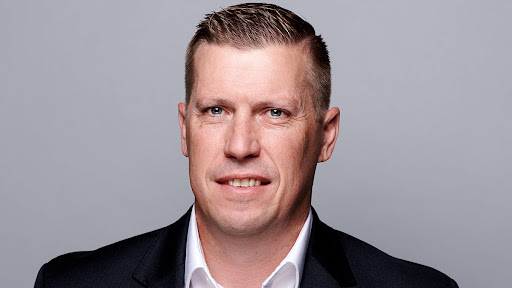
This is according to Jason Oehley, Regional Sales Manager at Arctic Wolf, and Andre den Hond, Sales Engineer at Arctic Wolf, who were speaking during a webinar on moving beyond traditional vulnerability management, hosted in partnership with ITWeb.
Oehley and Den Hond warned attendees that in vulnerability management, the gaps are larger than most organisations think and that context is crucial in managing vulnerabilities in the modern environment.
Oehley said: “What we see in the market is that around 18% of IT assets are not covered by patch or configuration management, 10% of IT assets are missing endpoint security, and 17% of IT assets are not covered by proper vulnerability management, which means around one in three IT assets is missing at least one critical control.”
At the same time, attackers are becoming much quicker to exploit vulnerabilities, he said.
“With a one-hour projected time to exploit by 2027 and AI exploiting vulnerabilities that have been missed by humans for years, we can no longer patch systems fast enough. We have to become more intelligent about how we manage vulnerabilities and start building efficiency into the way we do these things,” he said.
Oehley said organisations needed to overcome data silos and get a unified view of vulnerability findings, IT asset data, external exposure, identity risk, control coverage and remediation workflows.
He said: “Organisations need intelligent vulnerability management and attack surface management. Vulnerability management addresses known assets and attack surface management assesses known, unknown and unmanaged assets. When thousands of vulnerabilities are found, they also need to be able to prioritise the biggest risks, address them and validate that the fixes work.”
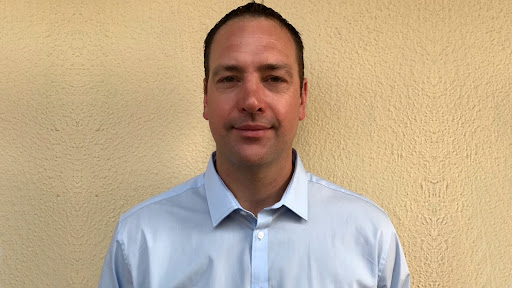
Showcasing Arctic Wolf’s Aurora Vulnerability Management and Aurora Attack Surface Management, Den Hond said: “Aurora Vulnerability Management gives a comprehensive view of assets and their vulnerabilities and helps organisations to prioritise remediation faster. It carries out external and internal scanning and agent-based vulnerability assessments on endpoints and servers, with integrated patch management. Arctic Wolf also has security experts in the loop to give customers remediation guidance.”
He emphasised the importance of prioritisation: “Better context leads to better decisions: comprehensive, high-quality contextualisation completely changes prioritisation. Through open integrations into existing IT and security tools, Aurora Attack Surface Management ingests inventory, aggregates, deduplicates and correlates data across users, devices, software, cloud and controls. It gives visibility of exposures, gaps, CVEs and misconfigurations, enables organisations to discover and prioritise exposures and helps to drive and verify remediation.”
Oehley said: “Organisations often have siloed inventories with no common view of what they have in their environment. With a common, dynamic platform, you can deduplicate information and easily answer questions like: Is this asset known and managed? Where is it? What is it? Is the core software up to date? What additional software has been installed? And: Does it adhere to our policies? A traditional way to try to consolidate this information is a configurational management database (CMDB). But this is often just a spreadsheet. Maintaining it can be a very manual process and it doesn't give you a dynamic view of the asset inventory.”
Oehley noted that Aurora Vulnerability Management and Attack Surface Management are better together.
Aurora Vulnerability Management provides the operational engine to identify, prioritise and remediate vulnerabilities and software misconfigurations. Aurora Attack Surface Management strengthens the asset and exposure context that those decisions depend on by expanding visibility, surfacing missing protections and helping validate that remediation has genuinely reduced risk. Together, they help create a more continuous path from visibility to prioritisation to remediation.
“When customers use both, we see a 43% reduction in instances of misconfiguration and missing endpoint security, a 40% drop in vulnerability coverage gaps, and a 45% decline in end of life exposure,” Oehley said.
Share

