
Business intelligence (BI) is evolving into consumer intelligence (CI), as the proliferation of mobile devices and a new breed of customers drive requirements for pervasive access to data warehouses content.
So said Dr Stephen Brobst, CTO at Teradata, yesterday during the Teradata User Group Conference in Johannesburg.
According to Brobst, data warehouses have historically been constructed to provide intelligence to business knowledge workers within large enterprises.
"A new breed of consumers is emerging with a DIY [do it yourself] mindset in relation to technology, and an unprecedented sophistication in using data for personal decisions. This change in consumer behaviour is creating a demand for consumer intelligence capability in which direct access to data is required for personal decision making," explained Brobst.
He also noted that mobile devices have become part and parcel of the everyday life for a lot of consumers, with devices offering access to anybody, anytime and anywhere because everyone has them.
"Mobile is the new normal," said Brobst. "We expect these devices to be always with us every time. Those traditional fixed-line phones in the home are shared devices. 'Who do you want to talk to?' With a mobile device, there is no such confusion; it is personal. A computer in the house is also a shared device."
Mobile devices really empower the consumer in a number of ways, said Brobst. "In the past, we spoke about e-commerce where we would go to the Web and buy stuff. But now, e-commerce is evolving into m-commerce [mobile commerce], it is no longer just about being online but about being mobile."
He cited an example of the retail industry, which previously used the concept of multi-channel where the consumer dials a call centre, shops online or goes to the shop.
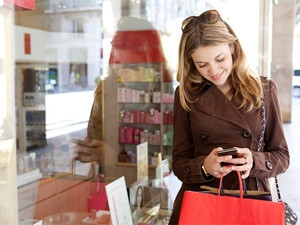
"Multi-channel is an obsolete term now; we, instead, refer to omni-channel, meaning we are now using the channels simultaneously. For instance, when walking into a store, I've got my mobile device in front of me and this helps me find products and gives me information reviews about the products. The mobile device is part of the shopping experience even if I am in the shop, at home or online."
M-commerce also now has a geo-spatial component to it, Brobst added, noting that consumers are thinking of ways to maximise on this component.
He referenced a shop in the US that sells tickets for movies, sports or events online. A larger percentage of the ticket sales are via mobile devices. The company has gone a step further to take advantage of the m-commerce space and is now delivering services through a mobile app which goes beyond just buying the ticket.
"So when one is going to a stadium with more than 100 000 seats, the app can start by helping you find parking; if the queue is long, the app can also inform you that for an extra $15, you can go through the VIP entrance where there is no line. Without that app, they would not be getting that extra $15. In the stadium of 100 000 seats, the app can also show you the exact entrance to locate your seat more easily," said Brobst
"After the game, the app can also give notifications about specials on the various shops outside the stadium. It can even say there is a special of two beers for the price of one at the pub you are standing next to, or through knowing your exact location, it can notify you about traffic congestion."
Brobst pointed out that the shop is making use of geo-spatial information and the power of analytics to make the right offer to its customers.
"The other thing that is happening is consumer-to-business (C2B), historically people heard about business-to-consumer (B2C). This shift has happened because the power has now shifted to the consumer," he said.
He added that the consumers are getting the power from the mobile devices which are also becoming more and more powerful.
"An iPhone 5 has more capacity than all the computers used to put the first man on the moon. And by the end of this year, there will be more than 100 million smartphones deployed in the US."
Share

