
A New York-based blogger has used publicly available data from New York City's online Open Data portal to expose thousands of illegal parking tickets, amounting to millions of dollars, distributed over the past seven years.
Ben Wellington, who is also a visiting assistant professor at the Pratt Institute in Brooklyn and a quantitative analyst at tech company Two Sigma, passed on his findings to the New York Police Department (NYPD), who owned up to the problem and revealed that the illegal tickets are an adverse effect of an administrational oversight.
'Abstruse' law change
"Mr Wellington's analysis identified errors the department made in issuing parking summonses," the NYPD admitted. "It appears to be a misunderstanding by officers of a recent, abstruse change in the parking rules."
Prior to the rule change, parking in front of a pedestrian ramp - a flat piece of curb allowing pedestrians easy access to the pavement - was illegal. Yet as of 2009, drivers have been allowed to park in front of a pedestrian ramp, provided the ramp is not connected to a pedestrian crossing.
According to the NYPD, the department focused on training traffic agents - who write the majority of parking tickets - to adhere to the new rule, neglecting to ensure that police officers were aware of the law change too. As a result, thousands of illegal traffic fines were issued by police officers who were unaware of the new change.
The NYPD says it is making efforts to better communicate and clarify the rule change to police officers, adding that "thanks to this analysis and the availability of the open [parking ticket] data, the department is also taking steps to monitor these types of summonses to ensure that they are being issued correctly".
Data discovery
Wellington made the data-driven discovery of the NYPD's errors when he himself was ticketed for parking in front of a pedestrian ramp "leading to nowhere", and decided to use the Open Data portal to see if this was a more common occurrence, he says.
"Though I get the tickets dismissed, [this process] is a waste of everybody's time," Wellington writes.
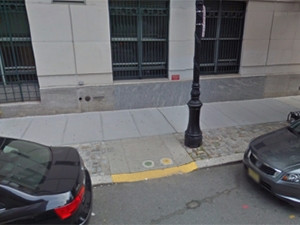
Using the Open Data portal to determine which pedestrian ramps generated the most parking tickets, Wellington used Google maps to look at the ramps and determine whether they were in fact illegal places to park, and found that the majority of them were not.
Wellington has created an interactive map of the top 1 000 ticket-generating pedestrian ramps, and encourages users to help determine which of them are legal or illegal places to park.
'Democratic'
Wellington advocates for open data as a means of improving governance.
"I've repeatedly said that putting data into the hand[s] of citizens will make our city run better and more equitably," he says in his blog post about the parking tickets.
"Democracies provide pathways for government to learn from their citizens. Open data makes those pathways so much more powerful."
Share

