
The CIO, as chief integration officer, is the key trend put forward in the Deloitte Tech Trends 2015 report, which examines disruptive technologies with the strongest potential to impact businesses irrespective of size, industry or location over the next 18 to 24 months.
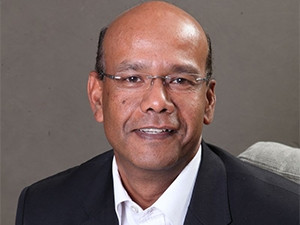
The report, released in Cape Town last week, illustrates overall the extent to which business and IT have fused, and continue to do so, says Kamal Ramsingh, technology leader at Deloitte Consulting Africa. While the report notes several different trends, the increasingly interdependent nature of business and IT processes is a pervasive theme, he says.
Other trends specified in the report are ambient computing, the API economy, dimensional marketing, software-defined "everything", core renaissance, amplified intelligence, and "the IT worker of the future".
New confrontations
Beyond the ongoing challenge to keep back end systems in efficient operation, CIOs are increasingly confronted with new roles IT plays in the business, and the challenge of integrating these roles and their accompanying IT solutions into a coherent whole, explains Ramsingh.
The burgeoning list of relatively new C-suite positions - such as chief digital officer, chief innovation officer and chief data officer - is testimony to the rise of new, increasingly IT-dependent business models, says the report.
Another challenge for CIOs is the need to incorporate new solutions into an old framework, Ramsingh continues. Often, this demands "core renaissance," as outdated or poorly-defined core architecture, often a result of underinvestment, impacts the business' ability to be responsive and agile in the face of technological innovation, he explains.
This trend links to the topic of technical debt, raised in the Tech Trends 2014 report, says Ramsingh.
CIOs faced with the consequences of poor past decisions may have to replace core architecture, he explains. In other cases, they may simply need to upgrade it, or move to the cloud, he adds. Technical debt will be a relevant trend for at least the next five years, Ramsingh predicts.
As data collection methods take off and customers create increasingly detailed, distinct digital footprints, new capacities for customer insight are emerging, and dimensional marketing will leverage this insight to reach out to and engage customers in newly individualised ways, says Ramsingh.
Amplified intelligence
Yet while computerised analytics and machine learning are being applied to larger and more complex datasets, the value of these technologies will be brought "through a human being," Ramsingh says.
Amplified intelligence refers to such analytics technologies not replacing data scientists but "augmenting their capabilities," according to the report. Intelligence is amplified by people who understand complexities such as the context of the information or the history of the company for which they are analysing it, says Ramsingh.
Yet this trend is one SA businesses will need to prepare for rather than immediately embrace, as data scientists are in short supply in SA, Ramsingh notes.
While education plays an important role in addressing this shortage, businesses are not exempt from responding to this challenge in their own ways, he says.
"The IT worker of the future" is here, and corporate culture needs to catch up with them, he explains. Tech-savvy, willing-to-learn millennials are arriving in work environments only to be hampered or discouraged by outdated models of participation and engagement that are not sufficiently stimulating or unwelcoming of new ideas, he says.
While ICT education is the primary solution to SA's ICT skills shortage, if businesses do not step up to keep emerging ICT workers engaged and interested, they are instead likely to exacerbate this shortage, Ramsingh concludes.
Share

