

Anthropic’s move to embed an invisible watermark in content generated by its Claude artificial intelligence (AI) model is pushing AI content identification closer to traceability; however, South African AI experts warn the technology could also create false authorship claims.
This is one of several concerns raised by local tech pundits, following the US-based AI safety and research firm’s announcement this week that it would start digitally watermarking text and images processed by its AI models, and include metadata in other types of files in order for the content to bear a signal associated with Claude’s AI model.
Anthropic says future Claude AI models will embed machine-readable marks in generated text, while supported image files will contain cryptographically-signed provenance metadata.
The firm’s move comes after the European Union's Artificial Intelligence Act set a deadline of 2 August 2026 for AI service providers to start rolling out identifiability measures across their AI portfolio, as more people across the globe increasingly use these emerging tools to produce text and near-authentic images.
Anthropic says it has signed the EU AI Act's Article 50(2) Code of Practice on Transparency of AI-generated content, and the firm has since published a guidance article detailing how new versions of Claude will comply with the Act’s requirements.


Local AI experts have raised questions about whether AI-generated content can be accurately identified, who controls that identification, and whether this can be trusted when people’s work, education or reputation is at stake.
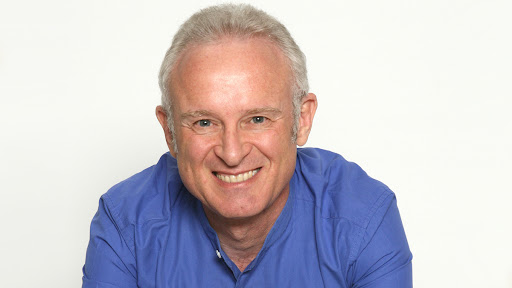
Arthur Goldstuck, MD of World Wide Worx, author and tech analyst, tells ITWeb that there is a broader industry move in this direction – and while watermarking can establish provenance, it should not automatically be treated as proof of authorship or misuse.
“A watermark may indicate that some text originated from a particular AI system. It cannot, on its own, establish who authored the finished work, how extensively the AI was used, or whether any rule was broken. Someone may use Claude to polish a paragraph, restructure a document or generate an early draft and then rewrite it extensively,” he explains.
“If users fear that legitimate AI-assisted work could later be treated as evidence of misconduct, some professional users may become wary of the platform. At the same time, enterprise customers may see watermarking as useful for governance and accountability.”
Goldstuck adds the greatest risk might arise when a watermark detection result is treated as a definitive verdict in settings such as education, publishing or employment.
“Much will depend on the accuracy of detection, and who is allowed to interrogate it, but the most important factor of all is a company's policies with regard to the use of AI. In general, it enhances the depth and consistency of corporate reporting, so it would be short-sighted and even silly to throw out the content baby with the bath watermark,” Goldstuck states.
According to Goldstuck, most major AI model makers will follow suit in some form: OpenAI and Microsoft already use combinations of provenance metadata and watermarking for generated media, so there is a broader industry move in this direction.
Circumventing the watermark
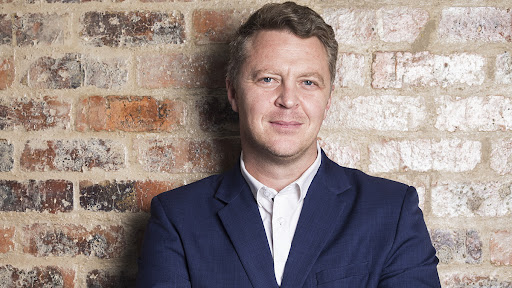
Johan Steyn, founder of AIforBusiness.net, echoes the same sentiments that a major concern about Claude’s move is the possibility that watermarking could contribute to false claims that someone’s work was generated by AI.
He points to universities that have increasingly questioned or dropped AI detection tools because of concerns about their reliability.
Steyn points out the rapid development of AI technology makes it difficult for detection systems to keep pace.
“The technology is moving much faster than these plagiarism tools can catch up. And we’ve seen in countries like ours and others where most students will write English as the second or third language, a lot of these tools might pick it up as plagiarism just because of the way we write.”
Steyn is of the view that this could have significant implications for education, particularly if watermarking is treated as definitive evidence that a student used AI improperly.
He suggests institutions may increasingly rely on oral examinations, whether conducted in person or through platforms such as Zoom or Teams, to establish whether students understand work submitted under their names.
Steyn also questions how difficult it will be for users to remove or circumvent the watermark.
“Claude-generated content could potentially be copied into a Word document or processed through other tools that humanise the text to deem it undetectable by AI. Also, this new development may encourage other AI firms to develop tools that illegitimately remove the watermark,” according to Steyn.
He points out the new technology could therefore become a waiting game for users and businesses as they assess how it affects their workflows.
“Whenever there is a new technology, people find a way to move around and to break it. There are AI tools that you can probably pay for, so we will have to wait and see.”
Who controls the watermark?
Another concern is who should have access to watermark information, following the detection process.
Goldstuck says users should be able to verify the provenance of their own work, while publishers, educators, employers and regulators should only receive access for clearly-defined purposes.
“A watermark should identify the generating system without exposing a user’s identity, account history or prompts. Access should be logged and open to audit where a detection result could affect someone’s education, employment or reputation. There also needs to be a clear process for challenging an incorrect finding,” he says.
Anthropic currently controls the mechanism for detecting its text watermark, although the company has said it is working towards enabling users and third-parties to detect the marks.
According to a GlobalData report released this week, Anthropic’s decision has sparked significant discussion among influencers on X, with some viewing it as a step toward transparency, while others question its impact on people who use AI-generated content.
Shreyasee Majumder, social media analyst at GlobalData, comments: “Since the watermark is invisible to readers but detectable only by Anthropic’s own systems, the debate focuses on how platforms, publishers, educators and businesses might use that signal.
“Some influencers also expressed concerns about whether watermarked content could affect the performance or acceptance of AI-assisted writing, while others questioned how reliably the watermark would remain detectable after substantial editing, paraphrasing, or translation.
“The discussion suggests that AI transparency is moving from disclosure to traceability, raising the importance of content provenance, and putting pressure on Anthropic to ensure reliability and prevent false authorship claims.”
Steyn believes the watermark could put some users off the platform, while some have raised questions about how the technology will work in practice.
“The impact on Claude’s subscriber base will ultimately depend on what users experience when the watermarking technology is eventually rolled out.
“If it’s going to stop me from doing what I do, depending on what that watermark will look like and how it’s going to work, I will probably not use it anymore. So, I do think they will carry a certain level of risk,” he says.
Goldstuck, on the other hand, believes the direct impact on Claude’s subscriber numbers will be limited.
“Most paying users choose an AI service for its capabilities, reliability, price and fit with their work. The bigger commercial risk is as old as digital technology itself: loss of user trust,” Goldstuck concludes.
Share

