
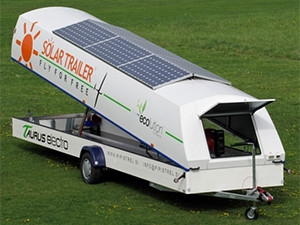
Pipistrel, a small Slovenian company, is manufacturing electric aeroplanes that can "fly for free".
The company has developed a solar charging trailer for flyers of its Taurus Electro G2 two-seater aeroplane. The portable, solar panel-fitted trailer offers 1kW of usable energy and can charge the plane in ten to 12 hours, depending on what batteries the plane is fitted with.
The Solar Trailer is fitted with a 12V connection for charging auxiliary flying instruments, in addition to 110V or 220V connection for charging the plane itself.
The trailer also stores energy it collects during daylight, so the plane can be charged overnight.
Electric outstrips gas
According to Pipistrel, the Taurus Electric outperforms its gasoline-powered counterpart, the Taurus, as it can use a shorter runway, climb faster, and perform better at high altitudes.
The electric plane's Lithium-technology batteries come in two configurations, which can launch the plane to either 1200m or 2000m altitude. The batteries are also fitted with an in-built battery management system, which offers data logging and battery health forecasting.
Loftier ambitions
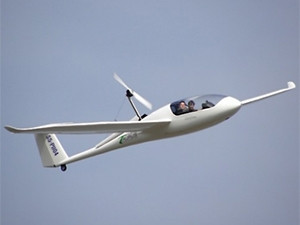
Pipistrel aims to expand its achievements into selling the world's first four-seater electric plane.
It prototype for this project - the Taurus G4 - won Nasa's Green Flight award in 2011.
Hefty price tag
Yet while Pipistrel's "fly for free" configuration is a first in the aviation industry, according to the company, the Taurus Electric carries a heavy base price tag of EUR109 300 - about R1.7 million.
Pipistrel - named after "pipistrellus", the Latin word for "bat", due to the shape of early Pipistrel planes' hang glider-style wings - has a South African branch.
Share

