
IT departments must embrace a more people-centric view if they are to succeed.
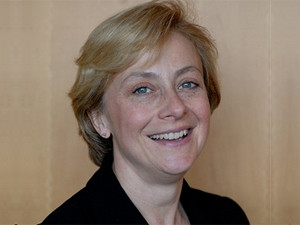
Debra Logan, distinguished analyst with Gartner, told attendees at the 2014 Gartner Symposium in Cape Town yesterday the technology world had developed a "machinist" view, and needed to develop a softer touch to avoid relegation to mere infrastructure support.
"There are two philosophies - a machinist view and a humanist view," Logan said. "The machinist is focused on business outcomes, and sees automation as the biggest driver, removing humans from processes, meeting functional requirements, and establishing order." Traditionally, IT roles strongly favoured such an approach, with a heavy focus on cost-containment and efficiency.
"The humanist has the same focus on the business, but subscribes to a different approach. Technology is there to put people at the centre, to enable them to do what they want. Technology is there to help people realise ambitions, and includes emotions and interactions; not traditional business practices. In humanism, it's not about control but participation and freedom."
With social interactions playing such a pivotal role in the evolution of customers and business services, a people-centric view is becoming critical, Logan said. But not, she stressed, to the exclusion of all else. "Neither approach is inherently good or bad. In our view, you need both, in balance."
Doing it differently
But, she noted, that is a big change for many IT managers: "Humanism doesn't come naturally to enterprise IT." However, it does come naturally to other departments, added Peter Sondergaard, senior VP, Gartner Research. Those departments are taking a leading role in people- and customer-centric innovation. That creates a threat and an opportunity for IT, said Sondergaard. "Other business units are hiring data analysts, software developers and cloud staff faster than the IT organisation is. They are innovating faster than the CIO's organisation can keep pace with." In short, he said, "your business units are acting as technology start-ups".
But there is an upside, Sondergaard said. "If you're a CIO, technology spend is going up even if it's not in your budget, and technology is your expertise, right? If you do this right, the benefits outweigh the risks."
Sondergaard suggest a three-pronged strategy to embrace start-up thinking: reinvent your IT budget through new technology that enables you and other business units to think and act like a start-up. Refocus the priorities of the IT organisation and the role of the CIO, and reskill the IT department and take an advisory role on technology upskilling across the organisation.
Logan calls for IT departments and their parent organisations to embrace a "digital humanism manifesto": Put people at the centre of technology-driven initiatives, embrace unpredictability and encourage customers and employees to innovate in unexpected ways, and respect personal space with unwavering commitments to privacy and transparency.
A humanist approach to product development also implies a fundamentally different approach, Logan says. Instead of creating something you think people want, or even asking them what they want, instead watch what they do. By closely monitoring the behaviours of customers or employees, patterns of behaviour will suggest improvements and points of pain which can benefit from innovation.
"The golden rule," Logan concluded, "is to always ask 'how would you like to be treated?"
Share

