
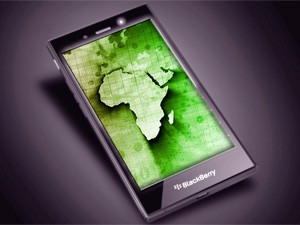
This year's Mobile World Congress (MWC) reveals the industry's growing focus on emerging markets, like SA, and the collective drive to connect the next billion.
This is according to Ovum analyst Richard Hurst, who says mobile operators would do well to heed the move to connecting the developing world - a move that casts an inevitable challenge, but also represents a massive opportunity.
"The opportunity lies in both what over-the-top (OTT) players are doing and the device vendors. But [operators] need to be smart."
As a case in point, Hurst refers to OTT player WhatsApp, which is set to launch a free voice service next quarter.
The instant messaging service, which has become hugely popular in SA, will offer free voice calls to its 450 million-strong user base to help it expand to a billion users, reports Reuters. WhatsApp has not clarified when the service will land locally, although it does not offer country-specific versions of the app.
Cheaper phones
Hurst says operators are faced with the challenge of rolling out infrastructure and network capacity to meet rising demand, as more people become connected - many for the first time - via smartphones, thanks to ever-falling costs.
"You can see [from MWC] that everyone wants to test the $50 market for devices, but the key will be the balance between user experience and the quality of the device. You can't present people with a shoddy experience on their smartphone, especially considering it may be their first online interaction."
On the other side of the coin, he says, operators will need to find ways of recuperating the costs associated with the required investment.
"It is likely we will see the next billion coming from urbanised emerging markets. We have already seen the emergence of megacities in markets like Africa, India and Indonesia, for example."
Nokia's X-factor
Celebrated as an event that sees the launch of some of the world's leading smartphone manufacturers' next generation of flagship phones, the MWC is also a launchpad for devices aimed at breaking new ground in terms of market and price-point.
This year, the four-day event has already seen darlings of the South African handset market - BlackBerry and Nokia - announcing low-cost smartphones.
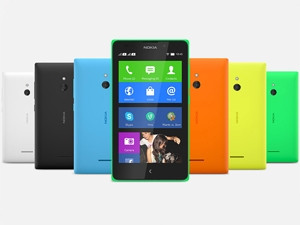
Soon to be acquired by software giant Microsoft, Nokia is turning to Google's Android software for a new line of phones set to make it a serious competitor in the dynamic low-cost smartphone market.
The Finnish company's first three models, the X, X+ and XL, are designed around an open version of Android and all feature dual-SIM capability. They run on a newly-debuted forked variant of Android, called the Nokia X Software Platform.
According to Reuters, Nokia CEO Stephen Elop said the market had "shifted dramatically", and the group needed to address a sub-$100 segment that is set to grow four times faster than more expensive phones.
Addressing the crowd at MWC, Elop said that rather than being a 180-degree turn in its strategy of using Microsoft's Windows Phone for smartphones, it was a move that introduces the next billion users to Nokia's hardware and Microsoft's services.
"We see the X family being complementary to [Windows Phone] Lumia at lower price points. Even as you see Lumia push lower and lower, you will see us push lower with Nokia X below that."
BlackBerry bid
Firing its own emerging market salvo in a bid to gain lost ground with its loyal base of customers, BlackBerry yesterday unveiled a cheaper version of its BlackBerry 10 debut device, the Z10.
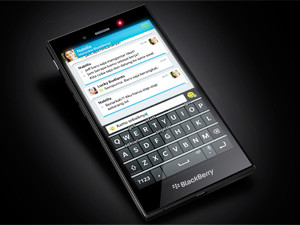
The new device - the BlackBerry Z3 - was designed around the company's still thriving Indonesian market, but CEO John Chen has confirmed the device will head SA's way too.
Codenamed Jakarta, the Z3 is priced at under $200 and is the product of a partnership with FIH Mobile, the Hong Kong-listed unit of Taiwanese electronics company Foxconn.
Chen says, while the Z3 is a 3G phone targeted at Indonesia, the company plans to go global with long-term evolution version of it "sometime in the future".
Mozilla debut
Meanwhile, Mozilla debuted a prototype for a low-cost phone at MWC this week. At $25, the company is positioning its device as "the world's cheapest smartphone".
A basic smartphone, Mozilla's device will run simple apps and have Internet capability. It will also feature integrated WiFi, Bluetooth, FM radio and a camera.
In order to make the phone possible, Mozilla signed a deal with Chinese low-cost chipmaker Spreadtrum to use its newly debuted SC8621 silicon chipset. The SC6821 chipset was also unveiled at MWC, and, according to Spreadtrum, "redefines the entry level of the global smartphone market".
Spreadtrum adds that the SC6821 is designed with a low-memory configuration and high level of integration to drastically lower the cost of materials required to develop low-end smartphones.
"The combination of Firefox OS with Spreadtrum's entry-level smartphone platforms has the potential to dramatically extend the reach of smartphones and the Web globally," says Dr Li Gong, Mozilla's SVP of mobile devices and president of Asia operations.
Share

