
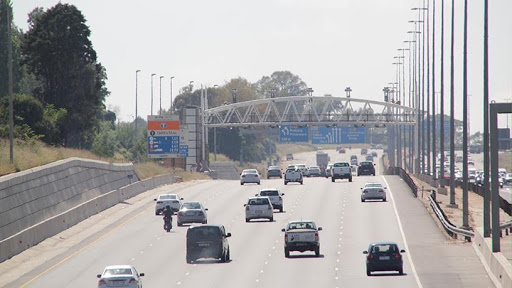
Cabinet has approved the South African National Roads Agency’s (Sanral’s) plan to shut down the Gauteng Freeway Improvement Project (GFIP), commonly known as e-tolls.
The move will also result in writing off debt owed by road users who did not pay e-tolls, said minister in the Presidency Khumbudzo Ntshavheni, detailing the outcomes of a Cabinet meeting.
The decision has subsequently been welcomed by principals in the Department of Transport, minister Barbara Creecy and deputy minister Mkhuleko Hlengwa.
In a statement, Ntshavheni says: “Cabinet noted the recommendations by Sanral to write off debt owed by road users who did not pay, and that National Treasury would service this debt, and the road users who paid toll fees would not be refunded because this was the law at the time.”
Despite public resistance, roads agency Sanral moved ahead with plans to introduce e-tolling on the Gauteng freeway system on 3 December 2013.


Sanral previously contracted the Electronic Toll Collection Company to collect e-toll payments on its behalf. However, the task was not without its fair share of challenges, egged on by ongoing resistance from motorists.
In 2018, trade union Cosatu and the Gauteng African National Congress embarked on protest action against the e-tolling system.
There was also push back from the Gauteng region of the Department of Roads and Transport, with the provincial government saying it wants to see the implementation of e-tolls in Gauteng halted.
In July 2022, a report said there was “an average 17.7% e-toll payment compliance rate on GFIP in the first six months of 2022”.
In the 2022 Medium-Term Budget Policy Statement, National Treasury announced it would allocate R23.7 billion to Sanral on condition it meets certain requirements regarding the GFIP. This was part an agreement between national and provincial government, where it was decided that the latter would contribute 30% to settling Sanral’s debt and interest obligations, while national government covered 70% of the debt.
In November 2022, the provincial government proposed a hybrid funding model to finance its 30% of the e-tolls debt and GFIP obligations.
In April 2024, government took the decision to discontinue the electronic tolling system on the GFIP.
Share

