
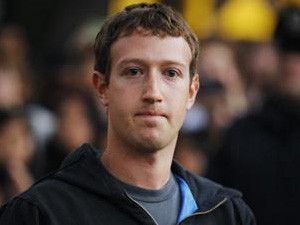
Everyone deserves to be connected and connectivity is a human right, yet the vast majority of people in the world do not have access to the Internet.
This is according to Facebook founder Mark Zuckerberg, who says the glaring "unfair economic reality" is that those already on Facebook have way more money than the rest of the world combined. "It may not actually be profitable for us to serve the next few billion people for a very long time, if ever. But we believe everyone deserves to be connected."
This comes after Zuckerberg launched a global collaborative initiative yesterday that aims to enable "the next five billion people without access to come online". The project, Internet.org, focuses on the two-thirds of the world's population that does not have connectivity.
Zuckerberg points out that the world's connected population - about 2.7 billion people - is growing by less than 9% a year. "[This is] slow, considering how early we are in its development and that it is expected to slow further."
What is more, he says, despite indications that most people in the world will soon have smartphones, the majority will still not have data access. Zuckerberg says this is because the cost of a data plan in many countries is more expensive than the price of a smartphone.
Internet importance
The creator of the world's largest social network says the Internet is not only about connecting people to friends, families and communities, it is pivotal to economies of countries and the world at large.
"Before the Internet and the knowledge economy, our economy was primarily industrial and resource-based. Many dynamics of resource-based economies are zero-sum. For example, if you own an oil field, then I can't also own that same oil field. This incentivises those with resources to hoard rather than share them."
A knowledge economy, however, is different, he says. "[It] encourages worldwide prosperity. It's not zero-sum. If you know something, that doesn't stop me from knowing it too. In fact, the more things we all know, the better ideas, products and services we can all offer and the better all of our lives will be."
'Basic services'
Zuckerberg's plan to bring basic Internet services to the unconnected is based on three main levers:
* Making Internet access affordable by making it more effcient to deliver data.
* Using less data by improving the effciency of the apps and experiences people use.
* Helping businesses drive Internet access by developing a new model to get people online.
He describes "basic services" as non-data-intensive, simple applications. "Data-intensive experiences like video, streaming music, high-resolution photos, Web sites with media and large ?les or app downloads consume the vast majority of all data.
"Basic services also need to be tools that people use to discover other content. These services should have the property that by making data for them free, people will discover more new content and use meaningfully more data than they would have if they didn't have access to these basic services."
Services like messaging, social networks, search engines and Wikipedia, says Zuckerberg, fit this defnition well.
"We are not prescribing any specific set of basic Internet services. We believe that the more efficient we can make this model, the more access the industry can collectively provide to basic services. And even beyond basic services, all of the technology improvements and efficiencies will make it easier for everyone to access all Internet services."
Zuckerberg concedes there is no guarantee most people will ever have access to the Internet. "It isn't going to happen by itself. But I believe connectivity is a human right, and that if we work together we can make it a reality."
For Zuckerberg's full piece "Is connectivity a human right?", click here.
Share

