
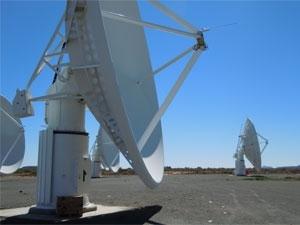
Mineral resources minister Susan Shabangu says the fracking regulations provide for determinations around site-specific buffer zones so that shale gas exploitation and the Square Kilometre Array (SKA) project can coexist.
This comes after Cabinet last week approved the gazetting of Technical Regulations on Petroleum Exploration and Exploitation, which will now be published for public comment for 30 days.
Shabangu says the regulations address site assessment, selection and preparation, taking into consideration resources that must be availed for hydraulic operations and "the resources in respect of which necessary protection must be afforded, such as the provision for the development of mechanisms for coexistence with the SKA observatory".
Concerns have been raised, since 2011, on the effect shale gas exploration could have on the SKA project. Commentators have said the actual fracking may cause a problem at a later stage, but the immediate concern is around strong radio signals that will be present because of the exploration.
Regulation scrutiny
The Democratic Alliance (DA) says it will scrutinise the regulations, which include shale gas and hydraulic fracturing (fracking) in the Karoo. James Lorimer, DA shadow minister of mineral resources, says he would like to see best practice guidelines in the regulations, including measures that will ensure the SKA site is protected from being affected by the gas exploration process.
However, Lorimer says he does not regard the effect of fracking on the SKA as a major concern. "I am carefully optimistic about the regulations. It sounds like [government is] extra careful about the SKA and as far as I understand, the SKA site is not prime fracking territory."
He notes that there are a number of other aspects to be taken into account, such the effect of fracking on nearby schools, residential areas and farming ground, as well as the possible pollution of surface or ground water.
Meanwhile, the Freedom Front Plus (FF+) has reiterated it will continue to oppose hydro fracturing to exploit shale gas "in every possible way". According to FF+ spokesperson, Anton Alberts, experts have said that an area in which hydro fracturing takes place can be written off in the future due to water and ground pollution.
"The FF+ will see to it that the voices of farmers and the residents of the area are heard. The Khoisan people have already talked to the FF+ and have indicated they are strongly opposed to it. We have, for a long time already, been warning that hydro fracturing could be equated to the damage which a nuclear explosion could cause. It is irreparable."
Shabangu says she is satisfied that the technical regulations have sufficiently addressed recommendations contained in the 2012 investigation report on hydraulic fracturing. "We believe, as government, that we have acted in the best possible way, in the interests of the South African economy and its citizens, and we will continue to do so as we traverse this journey of hydraulic fracturing for the production of shale gas."
The SKA is an international project to build a mega telescope that will be 50 times more sensitive and produce 10 000 times the survey speed of the best current-day telescopes. Its core will be located in SA, with a smaller array sited in Australia.
Share

