
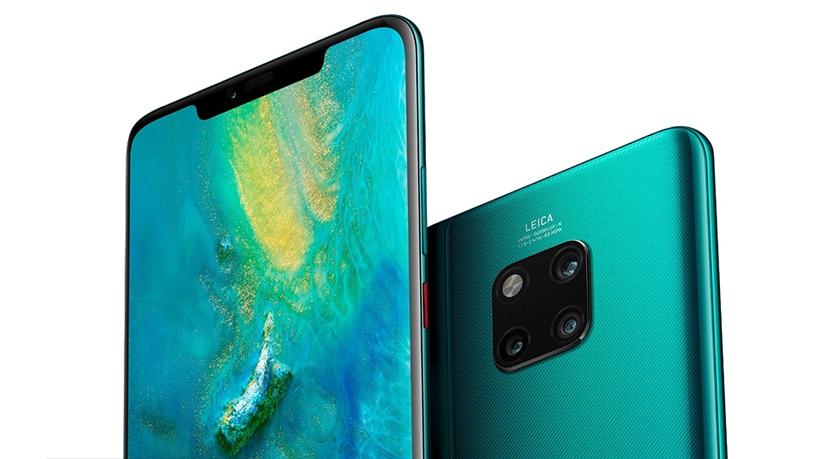
The Huawei Mate 20 Pro was officially unveiled in South Africa this week, the last of the top three smartphone manufacturers to release its flagship device.
The 6.39-inch Mate 20 Pro, like Apple's 6.5-inch iPhone XS Max and Samsung's 6.4-inch Note 9, is aimed at power users and business people who want to get the most out of their pocket computer and need the battery to last throughout the day.
Arthur Goldstuck, World Wide Worx MD, says there is a growing trend of larger displays to meet the need of the more visual focus of smartphones.
He notes smartphones have completed the transition from phablets to mini tablets, and are being used more and more as productivity and entertainment tools.
"People will probably find the size ungainly but as they experience the benefits, they will get used to it very quickly."
These smartphones are the most expensive devices to be released by each manufacturer, with the Mate 20 Pro and Note 9 recommended retail price coming in at R19 000 and the XS Max costing R24 000.
At this price point, manufacturers are packing in all the usual premium features, such as a large battery, fast processor, dual-SIMs, waterproofing, fast charging and a big screen display, and having to rely on unique features to differentiate themselves.
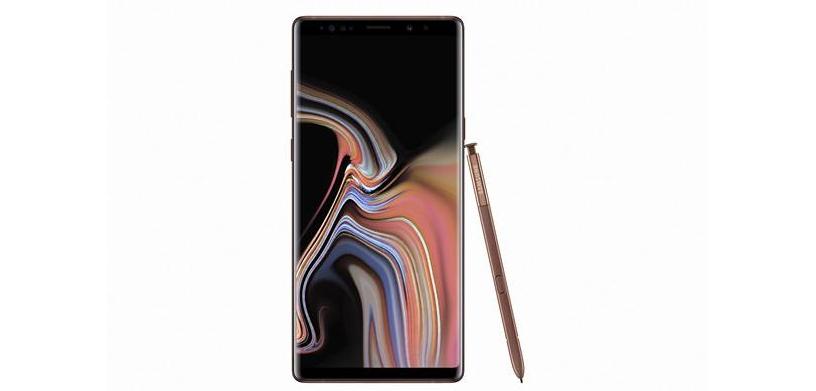
Goldstuck says it is all about what is seen as incremental improvements, such as the extra lens in the Mate 20 Pro or S Pen stylus in the Note 9.
He says Huawei adding an extra lens could be seen as just adding for the sake of it, although: "When you know how to use it, it significantly improves the device and becomes a creation device of high-quality content.
"The S Pen is a powerful differentiator for Samsung; it is what creates massive loyalty to the Note range.
"For the new iPhone, it is about Apple's brand and design ethos. Every element is thought through from a design and experience perspective, and iPhone users have a strong affinity for that ethos."
The Huawei Mate 20 Pro is the lightest of the three, weighing 189g, while the iPhone XS Max weighs 208g and the Note 9 is 201g.
One of the premium features Apple decided to omit in its flagship is a fingerprint sensor. It uses facial recognition instead, where the Note 9 has a physical button and the Mate 20 Pro has a fingerprint sensor built into the display.
The new iPhone has set internal storage of 64GB, 256GB (R26 999) or 512GB (R31 999), and is not expandable (up to one terabyte) like the Note 9 and Mate 20 Pro.
Huawei | Apple | Samsung | |
Price | R18 999 | R23 999 | R18 999 |
Display size | 6.39-inch | 6.5-inch | 6.4-inch |
Rear camera set-up | 40MP main, 20MP ultra-wide angle and 8MP telephoto | 12MP main and 12MP telephoto | 12MP main and 12MP telephoto |
Battery | 4 200mAh | 3 174mAh | 4 000mAh |
Storage | 128GB | 64GB | 128GB |
RAM | 6GB | 4GB | 6GB |
The would-be contender
Google also released a flagship smartphone this year, the Pixel XL 3, but Google hardware is not yet available in SA. The 6.3-inch Google Pixel XL 3 has a 3 430mAh battery with a choice of 64GB or 128GB internal storage.
It stands out from the other three flagship smartphones due its lack of a differentiating feature and only has one rear 12MP camera. ITWeb had the chance to play with the Pixel device at the company's Cloud Next event in London earlier this month and found that no extra cameras were needed as the image quality with only one was incredible.
Google has not given any indication as to when its hardware will be available in SA. It previously said the unavailability is because the full functionality of its personal digital assistant is not yet available in all markets. However, the devices can still be bought overseas and used here.
The recommended retail price for the Google Pixel XL 3 in the US is $899 for the 64GB, which would be around R12 750 at today's exchange rate.
Share

