
People, things, information, processes are increasingly connected to networks, creating new value and giving big impact to the future.
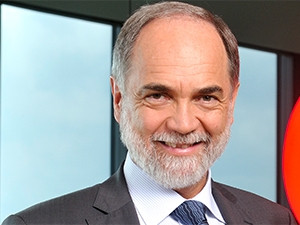
So said Dr Joseph Reger, CTO Europe, Middle East, India and Africa at Fujitsu, speaking at the Fujitsu World Tour 2015 in Johannesburg yesterday.
According to Reger, we are experiencing a multi-layering of connectivity - connections forming between people, businesses, information and processes, regardless of where they are.
Today, communities are no longer defined only by location, but by common interests, lifestyles or professions - we are becoming a "hyper-connected world", he added.
Fujitsu's vision of a hyper-connected world is one where what it calls "human-centric innovation", which empowers individuals and allows them to realise their creative potential to benefit society as a whole, regardless of technical expertise or location.
With digital technology, companies can harness people's creativity to make tailored, specialised products, but in ways that deliver value at scale and at low cost, he noted.
The key driver for the future is how people use technology. To produce value in a hyper-connected world, enterprises must put people at the centre of all these new digital technologies, said Reger, adding it is people who innovate and create new value for customers.
"In a world where artificial intelligence and smart machines are more widely used, businesses must ensure that people are not excluded but empowered to live and work better and more creatively. If technology is not helping people and improving their lives, it is self-defeating.
"This is about how people use technology to collaborate and create knowledge. It is about how a business communicates and engages with its customers and partners. It is not just about process automation or being 'smarter'."
Reger pointed out in a hyper-connected world, a digitalised business creates value from connections rather than assets. "This simple fact is driving a new business and economic paradigm, oriented around people."
"If we look back, before the industrial age, society relied on creativity. Craftspeople used their skills to make the things people needed. Products were specialised and made to order. But this was limited by people's time and resources, and did not scale. The pace of innovation was slow."
In a hyper-connected world, we have the opportunity to combine the benefits of craftsmanship and industrialisation, said Reger.
He pointed out Fujitsu believes technology exists to amplify people's intentions and help achieve their goals.
For the whole of human history, tools and technology have empowered people, improving their quality of life, economy and society, said Reger.
Therefore, all these ecosystems, from the hyper-connected world, have the power to deliver shared value on a wide scale - the wellbeing of people, urban mobility, safer food, education, sustainable energy, better environment, and disaster-resilient social systems, he concluded.
Share

