
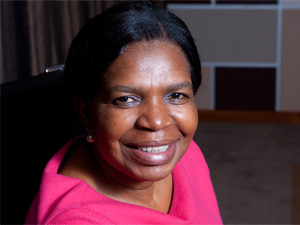
Success in addressing equity in the 21st century will involve the social appropriation of ICTs for local benefit, according to communications minister Dina Pule.
Speaking at the Innovation Africa Summit last week, Pule said one needs to look no further than the adoption of cellphone technology in Africa to be reminded of the absolute hunger of people to socially appropriate ICT.
She added that there are now more than 695 million cellphone subscriptions in Sub-Saharan Africa; a 400% increase in the last 10 years and this is still growing.
Exploiting ICTs
"The adoption of social media has exceeded much of the conventional industry, education and government wisdom, forcing a total rethink that encapsulates the involvement of people in the transactions between these sectors and their customers."
Pule also said nowhere is change more evident than in the unprecedented escalation of the capacity, mobility, affordability and accessibility of new forms of ICT.
The biggest potential for the useful impact of cellphones is in dealing with inequity in developmental states such as SA, added the minister.
"Mobile technology has revolutionised access to health services, banking, education, entertainment and information for many Africans. The African population is on average much younger than that of the rest of the world and, while facing greater uncertainty and with much lower disposable income, its willingness to adopt and appropriate this new technology is amply demonstrated by the uptake of all types of mobile technology."
SA's cellphone penetration rate has been pegged at 105%, according to Pule. Mobile penetration has in turn boosted Internet access with SA having growth of 25%, with an 8.5 million Internet user base at the end of 2011.
She also said it is expected that South African Internet users will exceed 10 million by the end of this year, accounting for approximately 20% of the population.
"The potential to address the service delivery challenges our country faces through ICT cannot be left unexploited."
Organised chaos
"It goes without saying that innovation is at the centre of engendering successful change in addressing major issues, whether they are societal, technical, scientific or commercial.
"The big question is how we channel and harness innovation to address the major challenges we face as a nation in SA," said Pule.
She added that many small innovations operating in isolation have a very difficult task in making the desired impact on the many priorities faced in SA.
"This then means that we need to focus on the nexus between creativity and the structures needed to harness the inbuilt creativity that exists in many people, whether they have high levels of formal education or not."
Pule cites the development of the iPod, iPhone and iPad into cult products that are now legendary. "It is this kind of innovation which we now seek to emulate, an organised chaos, if you will.
"Our communities have demonstrated that they have an unquenchable thirst for these new forms of ICT and it is our responsibility to respond in new ways that make sense to them in developing their inbuilt creativity."
Slipping ranks
"There can be no doubt that that these new developments in ICT are ideally suited to making this the African Century," said the minister.
"We have recognised that in dealing with the opportunity we have been presented with by these tremendous advances in mobile ICT, we need to aggregate policy across traditional government service departments, education, business, civil society and organised labour."
She added that a collaborative aggregation framework at the community level also needs to be established to achieve a positive impact against our national and global goals.
"That we now need a concerted and integrated approach across government, business, education, civil society and organised labour is made very clear by SA's slipping in e-readiness rankings, as indicated by the World Economic Forum's 2012 Global Information Technology Report. We are now ranked 72nd from a position of 47th just five years ago. This is in spite of advances in certain areas of ICT."
Share

