
SAP was founded in 1972 by five former IBM employees. In a publicity shot from the time, they’re posed around a table in a nondescript office, all holding pens and hunched over a large blueprint. The hair is bouffant, the suits dark, and no one is smiling. These are clearly men who take their jobs very seriously.
As the story goes, Xerox wanted its systems migrated to IBM, and the latter firm put five engineers on the project, who all worked in Mannheim, Germany. The project ground to a halt for reasons unclear, but the five had seen the gap in the market, and left to form their company, which they called Systemanalyse und Programmentwicklung, or System Analysis and Programme Development. It has been a long haul since the ‘70s, with the company constantly tinkering with its solutions while persuading many of the world’s largest firms that they can run their businesses better with its suite of solutions.
At the core of this suite is SAP S/4HANA. This is an in-memory database, and data is stored in RAM instead of disk. These databases can handle spikes in traffic, such as at telcos or banks, and allow for real-time analytics. Customers can have the platform installed in their own server room, or in the public or private cloud, or both. And with each passing year, more features are added, such as GenAI assistant Joule; its sparkly icon now appears on seemingly every page of the platform. Joule, on which SAP partnered with Perplexity, can run queries on all kinds of data, produce forecasts, book meetings, and make graphs and charts on the fly.
There was still an impression in the market that SAP was extremely expensive, very complicated, and not very pretty.
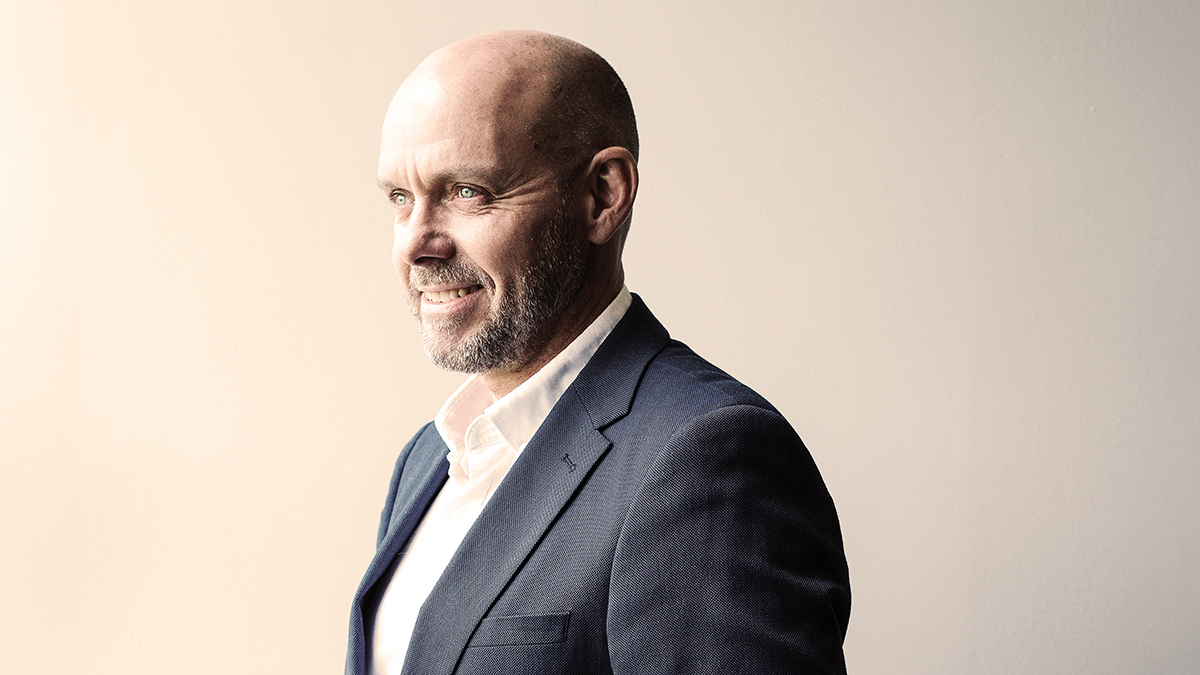
Garth Ridgway, NTT
All this work has borne fruit, and in March 2025, the company overtook Danish drugmaker Novo Nordisk to become the EU’s most valuable company, with a market cap of €313bn. It reported strong results for its third quarter in October 2025, seeing revenue rise by 7% to €9.08bn. Cloud revenue saw growth of 22%. But there are challenges ahead, not least of which is convincing customers that it’s now past the time to migrate their workloads from the old system called ECC, which is usually run on-prem, to S4. The company would like nothing better than for all its customers to move to S4, but many are proving to be recalcitrant. Support for ECC, introduced in 2015, is meant to come to an end in 2027, but customers can buy extended support until 2030, which will cost them an extra 2% in addition to their annual maintenance costs. Many companies contend that the current systems seem to be working just fine, and many are also cognisant, and terrified, of the upheaval the migration is going to cause. To this, the company dangles the prospect of new features with S4, along with the constant refrain that support for the old systems is, at some point, going to grind to a halt.
An estimated 40% of SAP customers in North America are yet to start migrating, according to a survey run by the Americas’ SAP User Group. About 60% of the 173 members are already live on S4, or are in the process of moving over, according to the research in November. Gartner said in March 2025 that most ECC customers had still not bought S4 licences. It said that in Q4 in 2024, 29% of 35 000 ECC customers had bought or subscribed to S4 licences.

Christian Hestermann, Gartner senior director and analyst for business applications, believes this is likely to remain the status quo. Speaking to The Register, he said that since September 2023, the company’s messaging had been about AI and Joule. “The message now is, 'You have to have AI, or you'll not be able to survive'. So far, that did not have a major influence. So none of those big events or big announcements has made a massive change up to now; the [migration] progress has remained fairly steady."
No such third-party survey has been run in South Africa, and the company doesn’t make public either its customer numbers or how many have migrated.
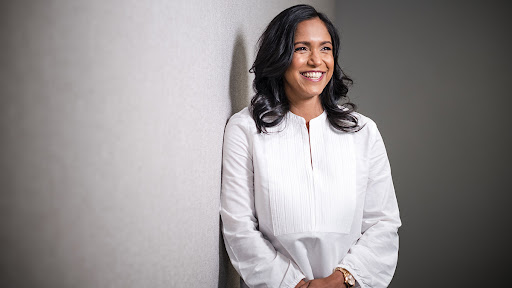
I asked Philipp Herzig, CTO, SAP; Nazia Pillay, MD of SAP South Africa; and Garth Ridgway, senior director, SAP, at NTT, for their views on how this migration conversation is progressing, and they spoke as one voice. Pillay says SAP had “made a clear line in the sand” with the date past which it won’t continue with maintenance. “Customers are aware of that and are making their plans to transform.”
Pillay was appointed to the top job in August 2025, and says she’s going to ensure the local operation is well equipped to have these conversations with its customers, as well as partners.
Why haven’t they moved yet?
It’s a matter of context, she says. “We have customers who have been with us for 20, 30 years, and that’s a godsend. But they bring a lot of legacy with them, and not just technical legacy. They have unarchived environments, non-optimised processes, or a lot of custom-built systems. They may have implemented ERP back in the day, and, in most cases, it was a project with a long duration, with a lot of blood and sweat going into it. Most companies understand they need to take that technology transformation journey, but they’re trying to balance the timing and effort required to bring a legacy system across [to S/4HANA]. There’s hesitation, because in the back of their minds, they remember that when they did it [last], it was really very difficult.”
Financial services is one vertical where customers have realised the imperative of the move, she says. The move was a “no-brainer” for Pillay, and offered data analysis, AI, agentic AI, and GenAI capabilities. She says if a customer isn’t speaking to SAP about the move, it may well be too late to get a system installed before the cut-off date.
“We’re prioritising helping those who are speaking to us to make that decision. We have to work with every customer individually to understand how they can do that transformation. There are different routes, based on capacity, budget and risk appetite. If you delay a decision, it’s going to be too late.”
The slow movers are also going to bring pressure to bear on system integrator partners, as Pillay envisages them being at capacity, or overcapacity, doing SAP implementations as the deadline draws ever closer.
“Then you’ll pay for skills, either locally, or you’ll have to look abroad. There’s going to be a material impact if a business takes this decision later on, and that’s what we’re trying to discuss with our customers and help them plan properly, so they don’t get into a position where they say, ‘Wow, we’ve left this too late, and now this is a monster’.” SAP NTT’s Ridgway says he’s spent the better part of three decades implementing SAP at customers, during which time the ERP landscape has changed dramatically. In the past, it was a two-horse race, the other being Oracle, and both companies served the large enterprise almost exclusively, he says. Large implementations took a lot longer than they do nowadays, two to four years, on average. He says SAP now comes more pre-configured, or more off-the-shelf than in the past. He and his team will do a quick discovery at a customer, and will then do what he calls a “vanilla” implementation to get the system up and running. Any innovation can come later, post the go-live date.
Another change in the market is that SAP is now competing for business with companies such as Microsoft and Sage. Ridgway says he’s seen a shift in the attitude and sales pitch from SAP. “In South Africa, there was a time when SAP owned 60%, 65% of the large enterprise ERP market, and Oracle was lagging behind. Every single large enterprise in South Africa has some form of ERP. There was still an impression in the market that SAP was extremely expensive, very complicated, and not very pretty.”
As for looks, he says the new interface is more user-friendly, and “much nicer to play with”. The company has also realised that there aren’t any R100mn projects out there anymore, which has meant its gone looking for customers among medium-sized businesses. “These aren’t small businesses, but they’re just not the $1bn organisations. I don’t think SAP wants to play in the small space, because that’s where Sage and QuickBooks are playing. But there’s a massive market in the mid-tier, which wasn’t untapped, but which SAP wasn’t focused on,” he says.
Customers have also become “smarter than they used to be”. “In the old days, we would go and sell SAP to them, explaining what it did. Today, the CIO knows everything about SAP and what it can do for them. It’s less about consulting around the roadmap, and more about, ‘This is what I want. Can you get me there?’ CIOs are m ore well-read, and they know what they want. It’s no longer about selling the technology; maybe it wasn’t ever about selling the technology. It’s more about selling the business solution. Once it’s implemented, what are the benefits that they’re going to realise? What is the innovation that we can bring to it, and what will be the ease of integration?”
Ridgway says the biggest part of its business is its application managed service (AMS) offering, and it’s serving around 100 clients on that platform.
As for the transition to S4, he thinks SAP, “tried to use a stick to force people to move. It realised that there weren’t enough consultants and capacity worldwide to move every single SAP customer from ECC to S4. It found a lot of resistance from clients, and it had a couple of clients that left them because they felt irritated by the stick and the threat of having support cut off. Coca-Cola Beverages Africa moved off SAP and went onto [Microsoft] Dynamics, which I think it found quite difficult. It’s a massive change and huge investment to start all over again. So SAP did lose some clients, but it eventually moved the date out to 2027. It also changed the sales approach from a stick to more of a carrot.”
The carrot appears to involve talking up the benefits and exciting new features of S4. Ridgway says SAP has dramatically changed the way it does business. “In the past, I think SAP was seen as very arrogant, very expensive and very complex. Today, it seems less arrogant and is playing in a different market.”
The company is now far more flexible with its pricing and subscription models. “It’s also not as complex as it used to be. I’ve been involved in projects that took 24 months from start to go-live. We’ve just completed a project that was five weeks from start to go-live.”
Do you still have customers who are on ECC? “Lots,” he says. “The biggest part of our consulting business is trying to convince customers who are on ECC that we get to the cloud, and we can get them to S4, with all the innovations and advantages.
“Some customers will say, ‘if it’s not broken, I don’t need to fix it. It’s giving me what I need’,” he says, but he believes this will add business risk because if something does go wrong, “come January 1 2028, you have no support from SAP”. This conversation with customers reminds him of those held when the cloud model was nascent around a decade ago, and “everybody said they had to move to the cloud”, which he says is similar to where AI is at the moment. “Nobody actually knows what it means. A lot of clients did rush to the cloud, and realised two years later that it was quite expensive, and it’s more complicated. But we’re a lot more mature now, 10 years in. There are a lot of clients who are hybrid. I think the way SAP designed its solution allows for that.”

He says with the application managed services part of the business, NTT will provide support for customers, many of which will sign up for a 36-month contract that will give them access to a call centre with certified, senior agents. As for what the customers are struggling with, he says the majority of the calls are related to password resets and authorisations.
Herzig, SAP CTO, speaking at this year’s Saphire conference in Madrid, said the company doesn’t disclose the official numbers, but it has around 10 000 customers worldwide that are on the cloud path. “The majority of customers are now making the cloud decision, specifically because the maintenance will definitely be over in 2028. And with all the innovation, there’s a very clear reason why they need to move.”
Why don’t they want to move?
“It depends on the customer,” he says. “Their systems have grown, historically, and they’ve been heavily customised. Back in the day, you could code left and right, because the code was open. Every table and every function module, and the systems integrators added their part to it. They did a lot of custom code. Maybe they were adding functionality, but they didn’t know [what effect it would have]. You’d start off with a very clean version of what SAP delivered, and then we innovated with the product. We built capabilities, and we changed the technology, and the customer did the same. And the longer this branching took, the harder it is to reconcile.”

By “clean core”, SAP thinks that a business should keep its ERP system as close as possible to the standard. This also means less customisations, which it says will create complexity in the long term.
“The customers want to know the upside, the benefit,” says Herzig.
“In general, the [legacy] processes run and they’re working and been working for the past 10 or 20 years. And that’s a challenge. But now when customers see there’s so much more innovation, and they can innovate so much more, with AI, with data, and new user experiences, they’re realising they need to move. That’s why we designed this toolchain, because we want to help the customer because we understand that doing it in a handcrafted fashion without additional tools is a challenge.
“We provide AI in the toolchain, to help the customer convert the custom code, to either get rid of it, or convert it, so there’s a clean core, with compliant code. Big customers have 500 systems or so, and that’s a big undertaking. It’s almost like moving an entire city.”
IN THE BEGINNING
SAP CTO Philipp Herzig, speaking at this year’s Saphire conference in Madrid, posed the question of how accountants went about their work prior to SAP. “They took pen and paper, and if they sold something to a customer, they wrote that in a book [called] accounts receivable. And if they purchased something from their suppliers, they wrote in the book accounts payable. And then they got payments from the customers, and they paid some of their suppliers. But of course not everybody pays, and so at the end of the month, they had to reconcile all of those payments, and determine which customers still owed them money, and how much they owed the suppliers, and how much they had in the bank. That is how accounting worked.”
All this became obsolete with the introduction of ERP systems, “because now all that stuff is in the SAP system”. “There’s an application, and you click on it, and it scans the database and pays the overdue suppliers, given the payment terms and the contractual agreements. Accountants still exist and have more work than ever before, but they just do an entirely different job. A lot of the work that is being done today, in accruals, for example, will go away, but there is so much more work that they can do, because the world is getting more complex.
“There are tons of challenges that we can solve. And it will allow humans to move on and really use what humans are good at, which is to design the next level of the evolution of history, based on AI.”
* Article first published on www.itweb.co.za
Share

