
Brent crude prices have jumped by over 50% since the start of the US/Israel war with Iran in late February. Unlike the market shocks that followed the Russian war on Ukraine in 2022, which disrupted trade routes, the virtual closure of the Strait of Hormuz has thrown the world into disarray. For countries that rely on crude, the message has been stark: diversify or remain vulnerable to shocks beyond your control.
South Africa’s energy narrative has been synonymous with failure: delayed maintenance, loadshedding, sluggish new energy developments, and corruption have all put strain on the economy since 2007. Progress in diversifying the country’s energy mix has been slow.
South Africa has a centralised energy generation model, and power stations have been built where fuel or water resources are available. The electricity then flows along transmission lines to substations and consumers. Most of the country’s coal-powered stations are in Mpumalanga. One of the problems with this approach, says Taru Madangombe, VP for the power and grid segment for MEA at Schneider Electric, is that there are transmission losses, which increase as energy infrastructure ages. “This means that a significant portion of the power we generate is wasted because it gets lost on its way to us.”
A decentralised model brings the power plant closer to the point of consumption, such as homes or farms installing their own solar power. Madangombe says the higher the current and the longer the line, the more energy is lost before reaching the end-user. And ageing or low-quality cables, loose connections, and inadequate insulation compound these losses. A smart grid, with sensors and automation, allows the operator to monitor performance in real-time. Smart grids automatically balance supply and demand to better manage the complexity of thousands of rooftop solar panels, batteries, and small generators feeding into the grid.
China has the world’s most extensive smart grid infrastructure, and will invest $722bn over the next five years to eliminate renewable energy bottlenecks. Meanwhile, in the US, Duke Energy, which operates the largest energy grid in the country, has partnered with Amazon Web Services to build AI-driven smart grid software that can anticipate future energy demand and identify where grid upgrades are needed.

There is some progress in this area in South Africa, and Eskom's ongoing smart meter rollout programme aims to provide real-time visibility into where electricity is being lost, stolen, or wasted. It can also give customers better insight into their own consumption. Eskom has two microgrid pilot sites in Ficksburg in the Free State and the Lynedoch eco-village in the Western Cape, where it is testing if decentralised power can be a solution for communities too remote to connect to the main grid. Over 70% of South Africa’s power is derived from coal. When demand is high, or a plant goes offline, Eskom uses diesel to run open-cycle gas turbines. While these may provide the power, it is costly. Eskom claims to have significantly reduced its diesel use, but it still spent around R10bn on diesel in the 2025/26 financial year.
Other than coal, which provides over 80% of the country's energy generation, solar accounts for between 8% and 10%, wind is at 5%, and nuclear provides between 3% and 4%. Pumped storage and hydro generates between 2% and 3%.
Recognising the need for diversification, government has produced an Integrated Resource Plan, which outlines targets to shift away from coal, towards a more renewable mix of energy sources. South Africa’s Renewable Energy Independent Power Producer Procurement Programme aims to add thousands of megawatts to the country’s electricity system by encouraging private-sector investment in renewable energy.
This [centralised energy generation model] means that a significant portion of the power we generate is wasted because it gets lost on its way to us.
Taru Madangombe, Schneider Electric
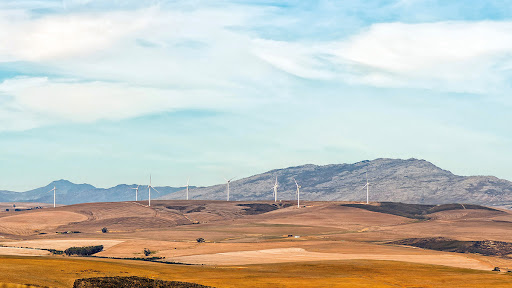
Estimates suggest that South Africa could generate enough electricity to meet current demand from solar alone. Wind power may attract fewer headlines, but our coastline, particularly the Northern and Western Cape, has some of the most consistent and powerful winds in the Southern Hemisphere.
Eskom has planned to build 12 battery energy storage systems, but the rollout has been slow. At present, only one 20MW facility is operational, in Worcester in the Western Cape.
The city of Cape Town owns and runs the Steenbras Pumped Storage Scheme, about 50km from the CBD. When it was commissioned in 1979, it was the first pumped-storage hydroelectric facility in Africa. Water is pumped to an upper reservoir during off-peak hours and then released through turbines to generate electricity during peak demand. This is one of the main reasons Cape Town has less loadshedding than the rest of South Africa.
Karen King, market director for climate resilience at consulting engineers Atana, says diversification is not just about adding solar panels or wind turbines, but, rather, about building an intelligent system that eliminates inefficiencies, improves visibility, and makes sure that each source covers the weaknesses of another.
AI-driven weather forecasting enables grid operators to anticipate solar and wind generation hours in advance. By analysing weather data, satellite imagery, and real-time sensors, these models can predict fluctuations in renewable energy output, allowing operators to proactively charge battery reserves and bring alternative generation sources online. AI can also improve maintenance by predicting when infrastructure is likely to fail based on historical data. This ensures that maintenance teams intervene before equipment breaks down.
FROM GARBAGE TO GIGAWATTS
At Cape Town’s Coastal Park Landfill, methane is being converted into electricity. The 2MW, R93mn project officially opened in November 2025. Wells are drilled into the landfill, and then the methane is piped out and fed into a generator that drives a turbine. City spokesperson Luthando Tyhalibongo says Coastal Park has 49 vertical wells, each sunk 30 metres into the waste, and 49 horizontal wells that draw methane up from the decomposing mass below. That gas travels through a main collector pipe toward the extraction and flaring plant. En route, condensate is stripped out, and the gas passes through a heat exchanger cooled to 7°C by a 110kW chiller, which removes a second round of condensate along with impurities that could corrode and damage the engines downstream.
Those engines, two J320 Innio Jenbacher units, each rated at 1 067kW, are the heart of the operation. Running at an electrical efficiency of around 40%, they can throttle between half and full capacity depending on the amount of gas the landfill is producing at any moment. This flexibility matters because methane yield and composition shift, calibrated thermal mass flow meters and gas analysers monitor the stream in real time, allowing the feed into the grid to be adjusted accordingly.
The plant is fitted with sensors for monitoring carbon emissions and plant performance, says City of Cape Town spokesperson Luthando Tyhalibongo. These include temperature sensors at the inlet and outlet of the chilling heat exchanger, which are monitored to ensure heat transfer is effective in reducing the gas temperature to around 15°C.
These engines produce 1.3mn kWh of electricity per month, which is enough to power over 4 300 homes. The process also transforms landfills, which were once a problem to manage, into a resource. Tyhalibongo says the landfill is a proof of concept more than a significant buffer against energy insecurity and that there’s potential to replicate the concept elsewhere. The Vissershok Landfill Site, about 30km north of the CBD, has already been identified as a location for a similar gas-to-energy project.
“Methane is 27 times more potent as a greenhouse gas than carbon dioxide. The plant's primary purpose is to capture it before it escapes and use it to create useful byproducts like CO2 and water vapour,” he says. While landfill gas-to-energy won't power the nation on its own, in a diversified mix, it turns an unavoidable waste problem into a dependable part of the solution.
* Article first published on www.itweb.co.za
Share

