
TV white spaces could form part of MTN's future spectrum strategy, as the group - Africa's largest mobile operator - seeks additional bands that can provide coverage in rural areas.
The operator's position differs from that of Cell C, which notes the two projects that have run in SA have been trials, and there is no licensing framework, while Vodacom is keeping an eye on the technology. Although the Independent Communications Authority of SA has yet to provide confirmation, industry observers note regulations should be wrapped up in time for a 2016 commercial launch.
Bertus Ehmke, senior manager for spectrum strategy at MTN Group, explains space in lower spectrum bands, such as 700MHz and 800MHz, where formal band plans have been specified, are very restricted.
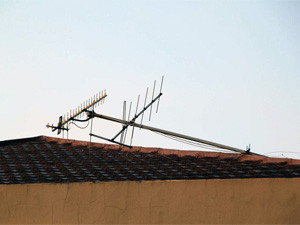
The relatively new television white spaces (TVWS) technology uses the spaces between television channels to provide broadband, an opportunity that will increase once SA finally moves off analogue television, although it can be rolled out as soon as the regulatory framework is wrapped up.
Rural rollout
Ehmke says the ability to use space around television channels - in the 490MHz to 698MHz range - will be hugely beneficial for covering rural establishments. "More specifically, in some of our smaller operations, terrestrial television transmission is sparse at best; as a result, there are some opportunities for finding bands that can be used."
MTN would "definitely" embrace the technology, welcoming a good combination of lower frequency spectrum paired with solid support in the device space, says Ehmke. "No business model allows for ubiquitous broadband into the further corners of the country, using higher frequency bands. Yet the upliftment and economic stimulation that Internet connectivity can deliver to even the most remote locations has clearly been shown."
TVWS is substantially cheaper to deploy, and an uncapped service will cost users between R20 and R30 a month, although speeds are currently limited to between 4Mbps and 6Mbps. This is expected to improve as technology advances, Microsoft SA MD Mteto Nyati has said.
More revenue
Nyati also indicated that if mobile operators do not embrace the technology, it will compete head-to-head with their current offerings.
Ehmke says TVWS does not necessarily mean MTN will be disrupted, as any shift in the landscape will open up new revenue opportunities where MTN - which has been seeking new revenue streams - will be eager to compete.
He notes, however, as long as the ecosystem is managed so that access and "entitlement" are balanced, along with commitment and capability to deliver a reliable service, it will not negatively impact the investments already made by existing players in the market. He adds TVWS will also still rely on off-grid power, microwave backhaul and network monitoring; areas in which existing players have made large investments and gained competence.
"What is important is a strong regulatory function that manages a robust process of geographic spectrum usage databasing and a swift interference resolution process. TVWS cannot be managed as a free-for-all domain. There should be measurable performance requirements, coupled to usage rights, and these should be reviewed on a frequent basis."
Share

