
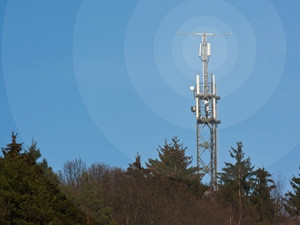
A small Cape Town-based firm plans to take on mobile giants by offering long-term evolution (LTE) across a WiMax network, at a third of the standard industry cost.
Clint Armstrong, CEO and CTO of the 40-employee Nucleus Networx, says he aims to take on the large operators and offer speeds of up to 35Mbps, while still making a profit. He expects "flak" from the large players, but adds: "Bring it on."
Armstrong claims the company is putting up SA's "very first" WiMax LTE network in the exempt industrial, scientific and medical open band. He adds that the company has finished configuring its first base station and aims to roll out a national network.
Nucleus Networx falls under holding company Kawuleza, which holds individual electronic communications network services (IECNS) and individual electronic communications services (IECS) licences, which give it the right to construct its own networks and self-provide, says Armstrong.
No choice
Kawuleza's move to use the open spectrum follows a lack of new spectrum being released by government, although the Department of Communications (DOC) has flagged it as a priority. "We can't wait any longer," says Armstrong.
Late last year, the DOC said it would soon make a decision on allocating space in the 2.6GHz range and listed spectrum allocation as a priority in its 2013 to 2018 strategic plan. However, the DOC has dropped the idea of allocating space in 800MHz for now.
The 800MHz range is currently used by broadcasters, but more space is expected to be freed up once SA moves to digital television, which has been pushed out several times and is likely to happen after the International Telecommunication Union's mid-2015 deadline has passed.
However, Comsol Wireless Solutions noted in a statement that the unlicensed band has become increasingly cluttered and scarcity of available freeband frequencies makes offering a reliable service within these frequencies virtually impossible.
Armstrong explains that WiMax works on a different protocol to other uses, which eliminates interference.
Dominic Cull, owner of Ellipsis Regulatory Solutions, has said the lack of more spectrum has led to widespread illegal use of frequencies. He noted the lack of available spectrum creates a situation similar to that in the US when alcohol was banned, which led to an underground market flourishing.
Cull notes it is easy to misappropriate spectrum and it is difficult to clamp down on its use, as no one will notice, as the frequency is not being used by the licence-holder. Much of the spectrum that is being illegally used is around the sides of the exempt industrial, scientific and medical 2.5GHz and 5.8GHz bands, he said.
Seeking investment
Nucleus Networx currently runs a national WiFi network, which it is converting into WiMax, says Armstrong. He says WiFi can only contain so many clients, and is also not carrier grade, while WiMax allows for near line-of-site connectivity at carrier grade levels.
Armstrong says the company plans to roll out in Cape Town, Johannesburg and Durban, in May, and is targeting Port Elizabeth and Bloemfontein by year-end.
The official launch of the network will be at the end of this month, says Armstrong. It will also offer free bandwidth to communities, such as informal settlement Khayelitsha.
Armstrong says the company has been self-investing in capital and spent R1.2 million getting the first base station up, with the biggest cost being that of backhaul. He says it is in talks with a potential investor and wants to raise another R50 million to roll out further.
Mobile giants MTN and Vodacom spend billions each year on their networks.
Speeds of up to 50Mbps are currently being delivered to its Cape Town corporate clients, says Armstrong. He adds that the company has bought capacity off several undersea cables, such as SAT3, WACS and Seacom, and upgraded its backhaul to handle 1Gbps.
Paving the way
Kawuleza was one of the first value-added network service (VANS) providers to come into existence and has been running for 13 years, says Armstrong. Thanks to a landmark 2009 case, former VANS licensees were automatically converted to have IECNS and IECNS licences, and given the right to construct their own networks and self-provide.
About five years ago, JSE-listed Altech took on late communications minister Ivy Matsepe-Casaburri in a lengthy court battle to force government to allow VANS providers to build their own networks.
The win paved the way for more than 500 to self-provide through electronic network services licences, instead of on-selling Telkom's services. Matsepe-Casaburri had doggedly opposed this concept since September 2004.
Altech's victory was hailed as a win for the consumer, as it allowed the industry to go ahead with planned investments to develop infrastructure that would likely bring down the domestic cost of telecoms by increasing competition against the established operators: Telkom, Vodacom, MTN, Cell C and Neotel.
According to the Independent Communications Authority of SA's Web site, there are 470 of these licensees, including Kawuleza, on its database.
Share

