
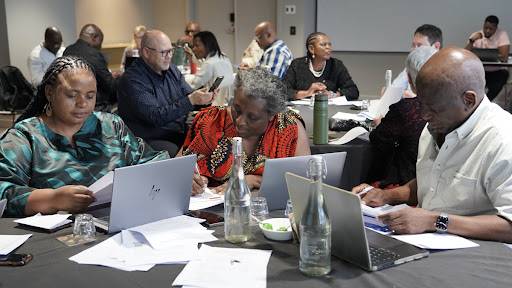
More than 35 judges and magistrates from across South Africa have completed two Commonwealth-led train-the-trainer workshops, aimed at strengthening the judiciary’s ability to adjudicate cyber crime cases and matters involving electronic evidence.
The workshops, supported by the UK’s Foreign, Commonwealth and Development Office, were held in Johannesburg in December and January, in partnership with the South African Judicial Education Institute. Participants are expected to cascade the training to colleagues across the justice system.
According to organisers, the programme focused on improving consistency and practical understanding of how courts handle offences committed online, as well as the collection, admissibility and evaluation of electronic evidence that increasingly features in both criminal and commercial cases.
Through group exercises, mock trials and peer-led sessions, judges and magistrates examined core judicial processes. These included the issuing of search warrants, application of legal safeguards, use of mutual legal assistance, and making fair and proportionate decisions in cyber-related matters.
Judge Nolonwabo Balele from the Free State said the training provided clarity on assessing digital evidence, while safeguarding the rights of accused persons.


“The main thing I learned is how digital evidence should be admitted, what to look for, and how to balance that evidence while protecting the rights of the accused,” she said.
Balele also noted the judiciary’s role in protecting vulnerable victims, particularly women and children, in cyber-enabled crimes.
Acting judge president Andre Petersen from the North West province described cyber crime as a growing threat, with significant economic and social consequences, estimating its annual cost to SA at more than R2.2 billion.
“Judges are trained in the law, but most judges are not tech-savvy,” he commented. “This workshop helps judges understand the intricacies of digital crimes and identify our shortcomings. We need a judiciary that can keep pace with the digital age.”
British High Commissioner to South Africa Antony Phillipson underscored the scale of the challenge, citing a 2024 survey showing that 47% of South African organisations experienced at least one cyber attack.
“Judges are critical stakeholders in the cyber law enforcement pipeline,” he added. “Equipping them is essential to building resilience against shared cyber threats.”
Commonwealth assistant secretary-general professor Luis G Franceschi encouraged participants to share their knowledge widely, noting that sustained training was key to strengthening judicial responses to cyber crime.
Since 2018, the Commonwealth Secretariat’s Cyber Unit has trained more than 2 000 law enforcement officers, prosecutors and judicial officials across 55 Commonwealth member states.
Share

