
SA is encouraging sub-Saharan countries to use the digital dividend, as well as other frequency ranges, to bolster mobile Internet connectivity in a bid to spur economic development and create jobs.
While SA is motivating other countries to free up more spectrum, it has lagged in allocating more space in the 2.6GHz range, which has been on the cards for several years, and frequency in 800MHz - the digital dividend - will not be freed up until the country moves off analogue television.
Both those ranges are more suitable for long-term evolution, which has speeds of around 70Mbps, than refarming current allocations, which is a costly exercise, operators have argued.
The digital dividend is the white space that will be freed up when countries in the region move to digital terrestrial broadcasting, which is a more effective use of space and allows several channels to be broadcast in the same space as one currently takes up.
In addition, because digital broadcasting is more contained, there is no spill over into adjoining multiplexes, which frees up more space. Mobile operators want this space to roll out broadband in rural areas, as it is more cost-effective due to its wider reach.
Economic benefits
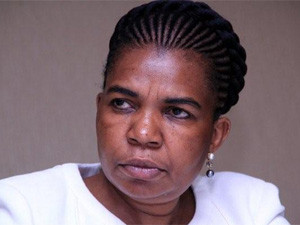
Addressing the 8th Annual Digital Broadcasting Switchover Forum, in Sandton, communications minister Dina Pule urged "governments in sub-Saharan Africa to prioritise releasing spectrum for mobile broadband".
Pule was referring to space in the digital dividend, as well as other ranges, such as 2.6GHz, which can be used to roll out faster broadband such as long-term evolution.
However, SA's own moves to release high-demand spectrum have been on the cards for several years and seem to have stalled. Democratic Alliance shadow communications minister Marian Shinn has said the department failed to release the policy directive for spectrum by mid-2012 "as promised" and has since vowed to complete the task by March.
"These persistent delays have a serious impact on the roll out of products and services based on high-speed broadband technologies, such as long-term evolution," she noted.
Towards the end of 2012, the department said it was set to soon make a decision on allocating space in 2.6GHz, but had dropped the idea of allocating space in 800MHz for now. SA should move off analogue in 2016. In November, Pule said the department was finalising the policy directive, which would allow ICASA to move ahead with allocations.
Peter Lyons, director of spectrum policy for Africa and Middle East, at the GSM Association, has said releasing spectrum in the digital dividend, the high-demand 2.6GHz band, and re-farming 1 800MHz by 2015 will add an additional 1.5 million jobs and R16 billion in gross domestic product.
SA currently has an unemployment rate of 25.5%, according to the latest figures released by Statistics SA. A five-year delay, pushing back spectrum release to 2020, would mean the 2015 to 2020 benefits would not be realised, noted Lyons.
Walk the talk
Ovum senior analyst Richard Hurst says Pule's statements seem to be a case of the country needing to take the log out of its own eye before removing the splinter out of a neighbour's eye.
Hurst says Pule's statement would be better received if it had come on the back of some clarity around more spectrum for faster broadband services. He says the region is characterised by delays.
Pule says the switchover to digital broadcasting "has the ability to change the face of our continent into that of an economic powerhouse. Let us use the opportunity to do so.
"The impact of broadband on the economy in increasing growth and creating employment has been well documented by the International Telecommunication Union and other global bodies," says Pule. The World Bank has estimated that a 10% increase in broadband penetration leads to an economic gain of between 1.21% and 1.38%.
The benefits are obvious to all the players, including government, users and regulators, says Hurst. "It's all talk about unlocking broadband potential, but nobody does anything about it. Let's have some action."
Share

