
South African organisations are generally aware of the importance of having a reliable business resilience strategy to protect against the negative impact of business disruption.
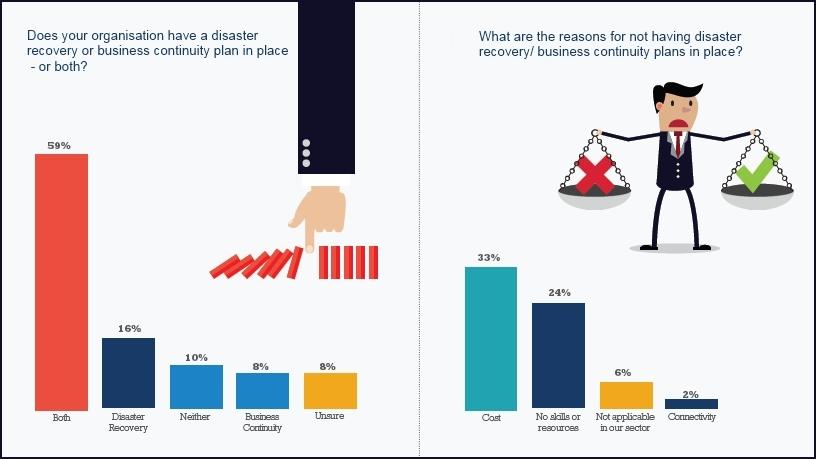
In a recent business resilience survey conducted by ITWeb and ContinuitySA, almost 60% of the participants said their organisation had both a business continuity and a disaster recovery plan in place. However, almost 70% believe the plan is not effectively communicated throughout the organisation. Only 8% report it is.
"A business continuity plan is critical because it looks beyond dealing with an emergency or disaster itself. It considers what will be required to get the business up and running as soon as possible after an event," said Cindy Bodenstein, marketing manager at ContinuitySA, commenting on the survey results.
Having a detailed plan that is regularly tested will minimise the effects of a disruption within an organisation, thereby reducing the risk of financial loss, she added.
A whopping 75% of companies, according to statistics, experience business failure within a three-year period if they do not have a business continuity plan in place.
"The objective is to minimise the disruptions in business to maintain high trust and confidence in the organisation," said Bodenstein.
"Management should proactively incorporate business continuity considerations into the overall design of its business model to mitigate the risk of service disruptions."
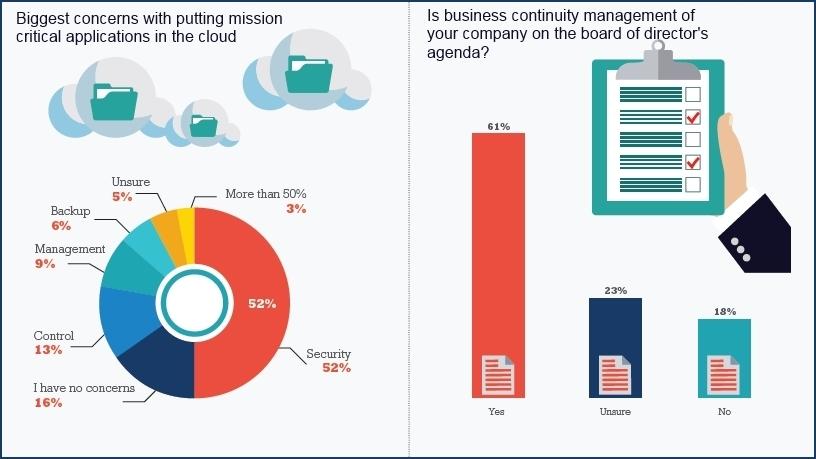
Over 60% of respondents reported that business continuity management is on the board of directors' agenda, and over 40% had added disaster recovery and business resilience into service level agreements with their key service providers.
The majority expressed confidence that their organisation can continue business with negligible disruption in the event of a disaster. Commenting on this finding, Bodenstein said an organisation should ideally conduct a business impact analysis to identify timesensitive or critical business functions and processes, and the resources that support them. "Once this has been carried out, an organisation can then identify, document and implement to recover critical business functions and processes."
She noted a business continuity team should be set up to compile a plan to manage a business disruption.
Cost factors
For the 18% of businesses that don't have a business resilience plan in place, or are unsure of it, the top two reasons are the prohibitive cost and the lack of skills and resources.
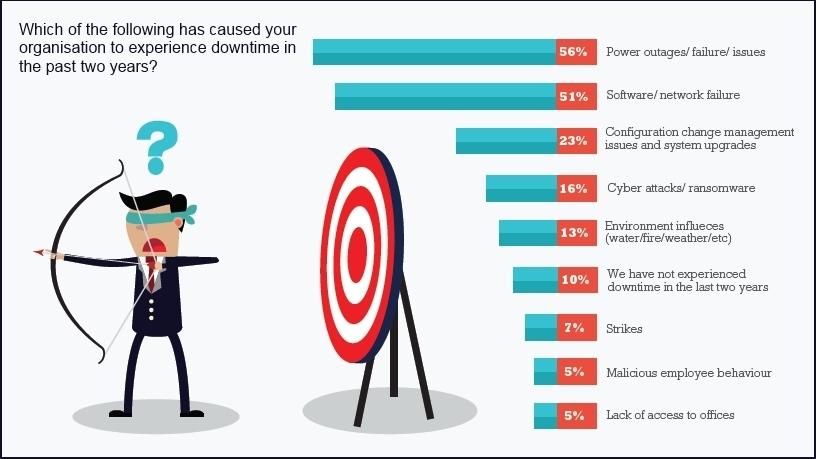
The main causes of downtime within the past two years are power outages (56%) and software and network failures (51%), and to a lesser degree configuration change management issues and system upgrades (23%). Only 10% of business had experienced no downtime at all.
By far the biggest concern with putting mission critical data in the cloud remains security (52%), followed by accessibility (23%). Over half of the respondents (57%) believe cloud computing and a mobile workforce alleviate the need for a disaster recovery site; however, 37% are not in agreement with this.
"For some organisations this may be the case," commented Bodenstein. "For example, with cloud disaster recovery in place, businesses can recover critical IT systems and data without the expense of a disaster recovery site. It is dependent on the organisation and what their requirements are as outlined in their business continuity plans."
Resilience is key
An overwhelming majority of respondents (80%) stated the primary reason for their business continuity management programme is organisational resilience and continuity of business. Reputation protection came in second at 55%.
"Retaining a positive company brand and image gives staff, clients and suppliers confidence in an organisation's services," noted Bodenstein. "Having a business continuity plan enhances an organisation's image with employees, shareholders and customers by demonstrating a proactive and mature attitude towards business resilience."
Additional benefits include improvement in overall organisational efficiency and identifying the relationship of assets, human and financial resources to critical services and deliverables, she added.
About the survey
The 2017 Business Resilience Survey set out to determine:
1 If disaster recovery and business continuity planning are a priority for SA organisations.
2 What the major causes of downtime are.
3 How often organisations test their disaster recovery/business continuity plans.
Who responded
* A total of 400 responses were received.
* 24% of respondents are executive management and 42% middle management.
* 38% of survey respondents are from fairly large companies with between 501-5000 employees and 18% are from multinationals with over 10 000 employees.
Share

