
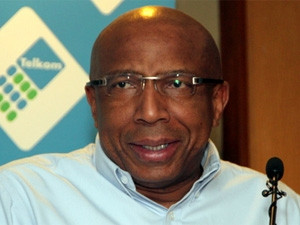
Telkom has voluntarily put a cap on the amount of shares it can issue, sending a message to the market that it is looking at its internal issues and is not in the market for a large purchase.
On Friday, 87.73% of shareholders voted in favour of Telkom's proposal that it would not issue more than 5% of its shares in issue in the current financial year. This is substantially lower than the 15% allowed under JSE rules, and sends a message that it is working on turning around.
Telkom faces several issues, including its dwindling fixed-line base (the core of the business), its mobile unit failing to gain the traction it needs, and a heavy cost base.
The voluntary cap still gives it some R600 million to play with, but indicates it is not in the market for a large deal. Telkom's previous endeavours have been less than successful, with both Multi-Links and Telkom Media exited at a cost.
Its stock is currently worth R24.20, after it recently went into recovery mode, reversing a previous freefall in its share price. It gained 42c or 1.77% on Friday, taking its market capitalisation to R12.6 billion.
Working on it
Telkom says it does not currently foresee using the authority. The company has previously hinted at acquisitions, but the limit suggests these will be small, and nowhere near as large as its failed Nigerian bid, or its unlaunched television venture.
At the close of the annual general meeting, CEO Sipho Maseko said the board is working on a three-pronged turnaround strategy about which more details will be revealed at the interim results announcement in November.
Maseko noted the main focus areas now are resetting the company cost base, creating a new affinity with Telkom customers and resolving the mobile issues in a sustainable manner. "The core ingredients of a turnaround have been identified. The next part will be how do we mobilise the whole of Telkom?"
In an explanatory note, the company explains that issuing shares for cash is defined as putting more stock on the market for cash, or to settle a debt or commitment. It notes that any shares issued would not be discounted by more than 10%, based on the weighted average traded price over the previous 30 business days.
Irnest Kaplan, MD of Kaplan Equity Analysts, does not believe Telkom would look at massive deals, but will rather focus internally. Ovum analyst Richard Hurst notes that any deal, if it makes sense, could be done in the local ICT space; an area it has previously hinted at.
Hurst adds Telkom does need to look within itself and start fixing things, while defending and growing its market share. He says Telkom needs to take a "hard look" at itself before starting shopping.
Its voluntary cap on issuing shares is its way of telling the market it will focus internally, says Hurst. He adds it needs to send a strong signal about where it is going.
Hurst points out that some of its previous deals have "proven to be less than fruitful". He notes it has burnt itself going in, and coming out.
Telkom's Nigerian foray cost it R1 billion when it sold out, and could cost it more as its former unit is party to a lawsuit brought against it by Blue Label Telecoms, which Multi-Links is defending. Telkom has guaranteed to stump up should an award go against Multi-Links and exceed a defined level.
Telkom's other African ambitions have also not paid off. M-Web Africa, bought for just more than R600 million, is now iWayAfrica, the result of the merger of Africa Online - a R150 million deal - and M-Web Africa. iWayAfrica has also been written down substantially in past years.
The operator also abandoned its pay-television subsidiary, Telkom Media, for a mere R68 million after failing to get it off the ground, and wrote off a debt worth R471 million.
Working relationship
Maseko says the passing of all resolutions at its AGM is "extremely encouraging" as it shows a greater alignment between Telkom and its shareholders. "Moreover, it is a result of a stable relationship between management and the board."

Government, with almost 40% of Telkom directly and another 10% held indirectly through the Public Investment Corporation, has previously been blamed for interfering in the company. Last year's AGM was marred by former communications minister Dina Pule's vote against some board members, which was the start of the board's disintegration.
In addition, last June, the state canned a proposed deal that would have seen Korea's KT Corporation buy 20% of Telkom for R3.3 billion.
Although Telkom's shares had dropped to the point where the offer no longer made sense, the cash injection would have aided Telkom as it was starting on a three-year R21 billion next-generation network rollout.
Maseko notes: "In the past six months since assuming office, much has been done to align the interests of, and to build the trust between Telkom, its employees and its shareholders."
Much to do
Telkom now needs to focus on its cost base, making its mobile strategy work, and defending its fixed-line pool. At the March presentation, Maseko said the 130-year-old group has complex problems and is at a major inflection point. Telkom was defining its mid- to long-term strategy and plan, as well as determining how to manage its wholesale and retail structural options, he said.
Telkom is thinking about its role in the wholesale sector and getting to the right model will be a journey, Maseko noted. It also needs to work out what its retail participation is, and where fixed, mobile and - potentially - triple play fit into this model, he says.
The company is also set to split into two functional units: wholesale and retail. This comes after the Competition Tribunal agreed to a deal between it and the Competition Commission that will see it deliver savings of R875 million to the market over the next five years and pay a fine after it admitted to margin squeeze.
In the year to March, Telkom reported total revenue of R33.1 billion, lower than last year's R33.7 billion, as decreased voice revenue, which dropped 4.7%, pushed down its top line.
Operating expenses, which include a R12 billion write-down of its legacy assets, leapt significantly from R31.3 billion to R44 billion, dragging Telkom to a comprehensive loss of R11.7 billion, as it has to take the non-cash charge through the income statement.
Stripping out the impairment, operating expenses increased at a lower level than inflation, at 2.2%, to R32 billion. However, its mobile arm reported another loss, some two-and-a-half years after launching as 8ta.
Telkom Mobile, which had 1.5 million revenue-generating customers at the end of March, turned over R1.4 billion in the last financial year. Its loss was trimmed from R2.2 billion to R1.7 billion.
Sasha Naryshkine, Vestact analyst, wrote in a note at the time that Telkom has seen its fixed-lines fall 22% over the past 11 years, and - in the past decade - the number of minutes spoken on the Telkom network has fallen nearly 44%. "It is fair to say that they have seen their core (original) business absolutely annihilated."
Naryshkine said that, if Telkom is to succeed, all of SA will win. "Just think how we could advance education with a high-speed broadband connection in every single classroom around the country."
Kaplan says it is in everyone's interests to have a strong Telkom. He explains this would increase competition, and points out that its network is still in use.
Share

