
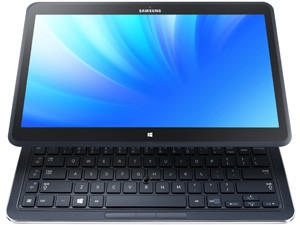
Following the announcement of Samsung's Ativ Q, which enables users to switch between Windows 8 and Android operating systems, industry experts have dissected the positioning of dual-operating-system devices.
Ativ Q, which can be used as both a notebook and a tablet, allows users to access Android apps via Google Play and to transfer files between Windows 8 and Android. The Ativ Q features a 13.3-inch touch-screen with full HD display and is powered by a 1.6GHz Intel Core i5-4200U processor.
World Wide Worx MD Arthur Goldstuck says the dual-OS device has been in the pipeline and the need for it has been observed for some time. "There has been a long-running trend of Apple Mac users installing Windows to help them engage in enterprise.
"The Ativ Q enables users to have everything on one device. One OS is better in one context, while another might be better in a different context."
Security glitch
The biggest issue with the dual-OS is security, says Swift Consulting CEO and tech blogger Liron Segev. "This is not the first device to have a dual system. Lenovo had one and it didn't work at all. The problem is very simply that it becomes a nightmare for any IT administrator when it comes to bring your own device (BYOD)."
He says this means there are two operating systems to control and both have to be secured. "With Windows, it's easy to lock it down and it won't affect the network, but when someone switches over to play Angry Birds on Android, they leave the network exposed."
However, Segev says it is not all doom and gloom for the dual-OS device. "If you have an Android phone and you've bought apps, they can be downloaded onto your dual device. And for documents, you can switch back to Windows. It gives you the best of both operating systems."
As to whom the device is targeted at, Segev says there is no clear distinction anymore between personal and business use. "Users have a business persona as well as a personal persona. That's why products, like Knox, have been designed to separate the two."
Segev says it has become important to ensure the two spheres don't collide.
Enough already
According to Segev, the Ativ range has done relatively well. "People have liked the fact that it is a laptop and that you can pull the screen out and it becomes a tablet. The only thing against it was the fact that it had Windows 8."
Segev says Samsung is trying to please the market on all levels. "This is a smart move, as they are providing a solution for everyone's needs, from smartphones, to PCs in every size."
But Samsung's constant delivery of new products to the market is starting to take its toll, adds Segev. "There are 26 Galaxy products and people are starting to become confused as to what device they should buy."
Segev adds that the specifications and sizes are evenly matched. "So how do you pick a device?"
He says the Ativ Q, however, is in a different category as it is a laptop-tablet conversion. "But the other Ativ devices are exactly the same without the dual-OS."
In conclusion, Segev says most people don't have the need for a dual-OS in their everyday lives. "So the question then is, will the Ativ Q sell millions? We'll have to wait and see."
Share

