
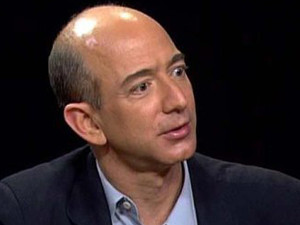
Although the $250 million price Jeff Bezos is paying for The Washington Post is less than a percent of his net worth, declining newspaper revenues have led to questions as to whether the price tag was too high.
The Post announced last week that Bezos was buying the paper in his personal capacity, but neither party seem to have yet stated what the future holds for the publication. However, it is anticipated that the industry could see a shake-up.
Reuters notes that, although Bezos, rather than Amazon, is buying the paper, it is widely expected he will in some way "Amazon-ify" the news business, implementing strategies imprinted on the company he founded in a garage 19 years ago.
There have also been suggestions that a closer tie-up between Amazon's Kindle and the Post are in the offing. Reuters notes the purchase of the publication could be viewed as an extension of Amazon's move towards content creation, most recently creating its own movies and TV series, which gives the company a new way of engaging with customers.
Shifting consumption
Vestact analyst Sasha Naryshkine says there are suggestions that Bezos may have overpaid, as newspaper advertising rates are plunging. He adds that the consumption of news is changing and evolving quickly. "Everyone's a reporter nowadays."
In a note, Naryshkine points out that Google's advertising revenue was $67 million in 2001, but leapt to $499 million in the last quarter of last year. "The business underwent the biggest ever transformation you can imagine in just a decade."
Yet, in the past four years, newspaper print advertising revenues in the US have halved, says Naryshkine. He says people have changed their reading patterns and are interacting through the new social media platforms.
Naryshkine adds it is no coincidence that more than half of the phones in the US are smart devices, and the adoption rate has risen from 30% in late 2010, to 61% at the last count.
"You can get your news at any time you want from your device in your pocket. No need to pay any extra for a physical copy. And the advertisers have rushed at mobile platforms in a huge way. The losers are clearly print in this case."
Naryshkine says Bezos may have overpaid, if this trend continues. "News is instant and everyone wants to be in the loop. Somehow that gives you an edge."
However, he notes that Bezos may be after the platform, and the delivery mechanism might change quickly. "A shakeup may happen that the industry might well thank Bezos [for] in time."
Better owner?
Bezos is buying The Washington Post Company's newspaper publishing businesses, which includes The Washington Post newspaper.
In the announcement statement, Bezos said: "I understand the critical role the Post plays in Washington, DC and our nation, and the Post's values will not change... Our duty to readers will continue to be the heart of the Post, and I am very optimistic about the future."
Donald Graham, chairman and CEO of The Washington Post Company, said the decision to sell came "only after years of familiar newspaper-industry challenges" made the company wonder if there might be another owner who would be better for the Post.
"Bezos' proven technology and business genius, his long-term approach and his personal decency make him a uniquely good new owner for the Post."
The transaction covers The Washington Post and other publishing businesses, including the Express newspaper, The Gazette Newspapers, Southern Maryland Newspapers, Fairfax County Times, El Tiempo Latino and Greater Washington Publishing.
Share

