My previous articles dealt with planning for data warehouses, building data warehouses using Wherescape Red, and the benefits of a data assessment - effectively all about collecting and storing the vast amounts of data generated from daily business operations for further analysis. This article is about trusting the information collected and stored for consumption by your business intelligence (BI) solution, says Dave Welensky, consulting director at Ixia Consulting.
BI represents the tools and systems that play a key role in the strategic planning process of the corporation. BI allows a company to gather, store, access and analyse corporate data to aid in decision-making.
Over the last couple of years, I have had a role that allows me to assist organisations with the movement of their data (data migrations) while they are in the process of upgrading some of these systems (ERPs) and also delivering BI deployments.
During the movement of data, we always drive analysis of the corporate data, as there is no better time to start a data governance process than during a data migration. This has involved various aspects of profiling, cleansing, consolidation and validation (again referencing the benefits of a data assessment). Although the companies are different each time, even on different continents, and the results vary from business to business, there is a common theme that presents itself time after time... "We knew our data might be bad, but we didn't realise it was that bad..." or: "We knew that department was using certain fields for their own purpose, but didn't realise how pervasive this was in the business."
The biggest aspect of BI delivering value to the business is not what BI tools are used or what graphics are displayed, but in the trust and acceptance of the values or figures. It is of no value to roll-out a BI solution via reports or dashboards if the end-user does not have faith in the values represented.
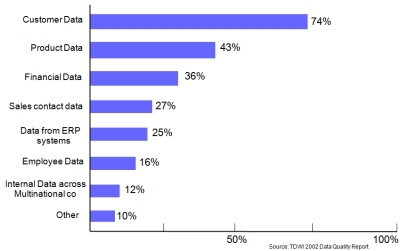
It is never too late to start some form of governance around the data, as, after all, data is a company asset. At all levels of a company and throughout all the departments within the organisation, establishing consistent data standards and governance are key first steps in the resolution of data concerns. For example, what are the required fields when creating a new vendor or customer?
It is also critical to break down the data silos within each department, opening up communication so there is an understanding of how finance uses production data or how marketing uses sales data. Creating business rules that link the entire enterprise together and allowing each business unit the visibility into meaningful and accurate data will put you on the right track to success.
Performing a data analysis, as per my previous article, is invaluable in the understanding of the data quality and issues in the business data and highlighting the effort required to kick-start this process.
There is a need for the IT department and business to work together, to understand the common goals in order the deliver a sustainable solution that provides value to the organisation, so who are the BI users in an organisation? For the most part, they're not the IT employees! IT merely facilitates the data - it does not create the data. This is business and the core of any BI solution.
Share


Editorial contacts