
Information regarding the outstanding e-toll contracts that were not revealed by the SA National Roads Agency (Sanral) won't stay confidential for long.
The Opposition to Urban Tolling Alliance (OUTA), which is challenging e-tolling in court, says the agency will have to bring an application to court prior to the judicial review on 26 November, for e-toll documents to remain confidential.
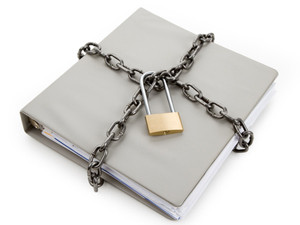
Sanral gave OUTA access to the outstanding documents, but first made the alliance sign a confidentiality agreement.
However, OUTA says the agreement is only temporary and the information will most likely be revealed in November.
Application overthrown
"The confidential agreement relating to the document is only valid until the hearing of the review application, which will commence on 26 November 2012," says the alliance.
It adds that the letter from Sanral's attorneys, dated 26 September 2012, and which forms the basis of the confidentiality agreement, said the following: "The documentation tendered (to OUTA) for inspection will be maintained confidential by your clients (OUTA) and will not be disseminated in any form whatsoever to a third party. An appropriate order in this regard will be sought at the hearing of the review application."
OUTA explains that this means Sanral will have to bring an application to court prior to 26 November, for the documents to remain confidential and not be made available to third parties.
"Such an application will be deposed by OUTA and other applicants, including the media, who also have an interest in these documents."
Legal wrangle
The alliance also explains that it signed the confidentiality agreement to protect the judicial review dates.
In the court papers and affidavits being filed for the review, Sanral and National Treasury have often made reference to the e-toll contract which neither OUTA nor the public had seen.
"Obviously, it is imperative that we needed to gain sight of the ETC contract, in order to counter the claims and arguments made by Sanral."
Sanral initially indicated that OUTA had no need to see these documents and would not make them available. The alliance then had to threaten court action to gain access to the contracts, especially because documents referred to in court papers must be made available to the other party.
"A legal wrangle was about to commence so as to gain access to these documents, which would have delayed the full judicial review in the High Court, set for 26 November 2012," says OUTA.
Clandestine deal?
It adds that Sanral then offered to make the contracts available to OUTA on the basis that these remain confidential.
"Under the advice of our attorneys and to ensure that legal papers are filed on time to retain the full judicial review date, OUTA agreed keep the contracts confidential."
However, this does not imply that the alliance is making any "clandestine deals" with Sanral, emphasises OUTA chairperson Wayne Duvenage. "The information has also enabled our transport economist to verify our concerns that e-tolling is a waste of taxpayers' money."
The alliance says it feels strongly about the lack of transparency by Sanral and will continue to call for government and the court to make these and all contracts related to e-tolling available to the public.
"After all, it is the public and business who are expected to pay the tolls. If there is nothing to hide, set the information free."
No point
Justice Project of SA national chairperson Howard Dembovsky agrees, saying members of the public should be outraged.
"Who is expected to pay the tolls? It's the public, so what's the big state secret?"
He adds that Sanral is now making an application to have sections of the documents blanked out in the court review process.
"If you're going to have a court review based on only some of the information, then what's the point? Is this what we should expect from democracy? I take extreme offence to it as a member of the public."
Sanral did not respond to requests for comment by the time of publication.
Full disclosure
Democratic Alliance (DA) Gauteng transport spokesperson Neil Campbell also questions whether Sanral has something to hide, since it refuses to release the information to the public. "Who is it seeking to protect?"
The DA previously attempted to obtain the information under the Promotion of Access to Information Act and this resulted in a meeting with Sanral where a large number of papers were shown to it, piled in a room.
"The DA was informed that we would have to pay an unaffordable R1 million to cover the cost of copying the documents," says Campbell.
Cosatu secretary general Zwelinzima Vavi later asked for the contracts and he received a few, but with large tracts of the text removed.
Parliament requested the 33 e-toll sub-contracts to be revealed, but received only 27.
"The latest in the smoke and mirrors saga is the confidentiality requirement which adds to the thick veil of secrecy surrounding e-tolling. This adds to speculation that someone at Sanral or in government stands to make a pot of money out of this whole toll saga.
"Full disclosure must be given to the residents of Gauteng who must pay for this costly exercise in the High Court review case," says Campbell.
Share

