
When it comes to compliance, many businesses are going wrong because their master data is not centralised and secured. By automating personal information data inflows, data security can be guaranteed through electronic signature technology.
ITWeb Security Summit 2018
Registration is open for the ITWeb Security Summit 2018 in Johannesburg and Cape Town. Ex-perts from around the world will be presenting, including global security expert Mikko Hypponen, who has been instrumental in uncovering and bringing down several infamous threats, and has assisted law enforcement agencies across the globe. In addition, several other top speakers will be sharing their knowledge, including Intel's Rodrigo Branco, who will unpack blinded random block corruption attacks for the audience. Get involved in #SS18HACK and choose from three half-day workshops or a full-day boot camp, plus five training courses, and much more. For the agenda, click here.
#SS18HACK is open for registration - click here for more information.
To find out more and register for the ITWeb Security Summit 2018, go to: http://v2.itweb.co.za/event/itweb/security-summit-2018/?page=agendaday1
Moreover, IT departments are not necessarily trained in the legal aspect of regulatory compliance and vice versa legal departments are not technically skilled to understand the technical application of the relevant law. Therefore development and training is necessary.
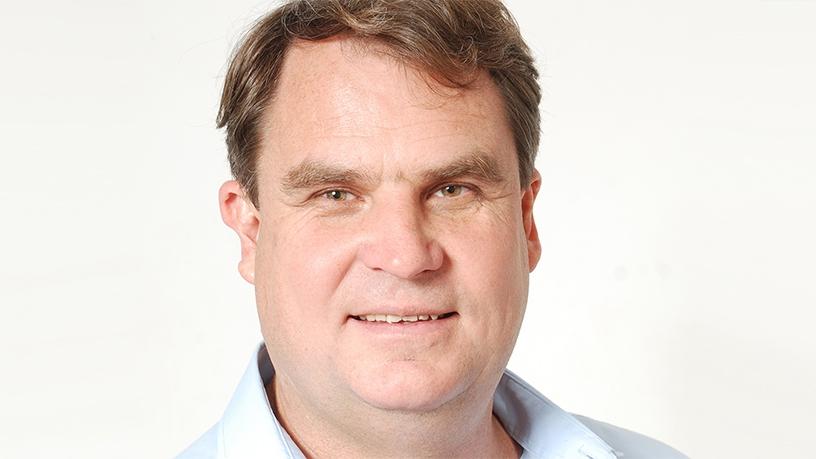
So says Gideon Bouwer, cyber law and criminal law forensics specialist at Cyber Law Forensics, who will be presenting on 'Electronic handshakes: Obtaining Global regulatory compliance with regards to privacy laws through electronic handshakes as a cyber security tool,' at the ITWeb Security Summit, to be held from 21 to 25 May at Vodacom World in Midrand.
He says electronic handshakes can be defined as computing communication between a computer system and an external device, by which each tells the other that data is ready to be transferred, and that the receiver is ready to accept it.
An electronic handshake is by its very nature, technological. It is made up of various pieces of computer hardware that communicate with each other through software, he explains. "It is therefore robotic in nature."
Protecting personal information
According to Bouwer, the question that arises with regards to data flow compliancy and personal information compliancy is: can the handshake process be utilised to preserve, protect and encrypt personal information in a way that makes such information POPIA and GDPR and APAC region compliant.
"The answer is a definitive yes," he says. "By applying electronic handshakes in the form of electronic signatures, an automated and integrated IT solution can be implemented in any business environment to obtain 100% compliancy."
Speaking of how electronic handshakes can benefit a business's cyber security posture, he says as a personal information compliancy and cyber security tool, they can be effective for several reasons. Firstly, the information signed can be encrypted and therefore fully secured.
In addition, only the intended recipient can access the data, and the required privacy policy can legally be agreed on and is binding on both parties. The data can also be made available for future reference, and its integrity and authenticity can be guaranteed. Finally, the data can be stored and transferred at will.
Share

