
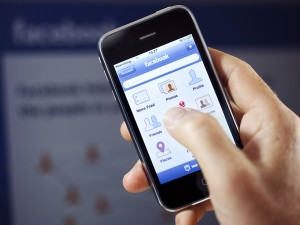
Popular social networking site Facebook has hit a billion users, giving it a user base roughly equivalent to the population of Africa, and covering one-seventh of all the people on the globe.
However, the majority of its users access the site through mobile devices, which has been a bugbear for the network as it battles to spin advertising revenue from those who access the site through portable tools.
Facebook founder and CEO Mark Zuckerberg, who owns a controlling stake in the site, yesterday posted on his timeline that there are now more than a billion people using Facebook actively each month.
"If you're reading this: thank you for giving me and my little team the honour of serving you. Helping a billion people connect is amazing, humbling and by far the thing I am most proud of in my life," he wrote.
Facebook was founded by Zuckerberg, in 2004, in his Harvard dormitory room. Zuckerberg says on his wall: "I am committed to working every day to make Facebook better for you, and hopefully together one day we will be able to connect the rest of the world too."
Share slump
Yesterday, the service confirmed it hit a billion users last month, but 60% of these access the site through mobile devices. Reuters reports that Facebook took three years to reach 50 million users, and hit 500 million in 2010.
During ordinary trade yesterday, Facebook shares gained 0.5% to close at $21.83 during trade on the Nasdaq. After hours, its shares took a hit after Zynga, which accounts for 15% of Facebook's revenue, cut its 2012 outlook.
Facebook, which listed on Nasdaq in May, has seen its share price come under increasing pressure over concerns that its revenue growth is stagnating. When the group listed, its shares were offered at $38, making it worth more than $100 billion, while it is currently worth $47 billion.
Vesact analyst Sasha Naryskine says investors are currently paying for "fresh air" as the group battles to turn mobile into money. However, he points out that the business is generating revenue, which makes the network different to the dot-com bomb at the turn of the century.
In the second quarter of the year, the group reported a drastic slowdown in revenue growth, which gained 32% to R1.18 billion, its slowest rate since the first three months of 2011, the earliest period for which the company has disclosed information about its revenue growth, Reuters notes.
The popular Web site recorded a net loss of $157 million because of hefty stock compensation charges related to its listing. That compared to net income of $240 million in the same quarter in 2011, noted Reuters.
At the time, Zuckerberg said Facebook's goal was to help every person stay connected. "That's why we're so focused on investing in our priorities of mobile, platform and social ads to help people have these experiences with their friends."
During the quarter, it launched several new mobile products, including a new Facebook camera app for the iPhone, and an improved version of the mobile messenger app for both iOS and Android. It also expanded the rollout of Sponsored Stories in News Feed and enabled advertisers to buy Sponsored Stories in its mobile News Feed.
Monetising mobile
Naryskine says the question is how Facebook will turn its billion users into sources of revenue with the increasing shift to mobile, as the smartphone revolution has caught everyone off guard. Research predicts that 2.5 billion people will access the Internet through mobile devices by 2016, he adds.
The proof as to whether the network is heading in the right direction, will be seen in the next four to six months, says Naryskine.
Last month, the social network said it expected advertising - its biggest source of revenue - to grow at a slower pace than the number of people signing up for accounts. This is because Web use will grow more slowly than mobile and declines in certain markets where smartphone adoption is occurring most rapidly, it said.
In its filing before its debut, Facebook highlighted a potential concern for investors, stating it is yet to generate any meaningful income from its mobile services.
"If users continue to increasingly access Facebook mobile products as a substitute for access through personal computers, and if we are unable to successfully implement monetisation strategies for our mobile users, our revenue and financial results may be negatively affected."
Share

