
Fujitsu's vision is one of human-centric innovation for a hyper-connected world. This emerging hyper-connected world will have an enormous impact on the future.
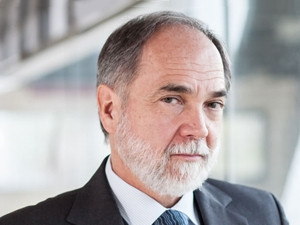
So said Joseph Reger, CTO of Fujitsu's EMEIA business. "The number of connections is going up. The Internet of things (IOT) and big data, essentially the people and the things around us, are all linking together, sharing information. More connectivity means more collaboration, and it means more complexity too."
He said the hyper-connected word is leading to digital transformation. "There are two kinds of digital businesses. The first kind is the business in which the product itself is digital in a natural way. The second is the business in which the core product is not digital, but everything connected to the product ? big data, supply chain, marketing, manufacturing ? is digital. Starbucks would be an example of this.
"Fujitsu is enabling companies to digitise their business; this is the human-centric approach," he said. "The only limitations are ideas, innovation and ICT resources."
He added what is also needed is for employees to contribute to true business innovation. "Things don't innovate, people do. Computers aren't clever, they just think they are," he quipped.
Ultimately, innovation is best done by the people for the people, he said.
Fujitsu is defining Web APIs for all its services. "In this way, products will become value chains, and eventually the products themselves will become services, from the cradle to the grave."
Reger added Fujitsu is enabling businesses to digitise and innovate by combining their business knowledge with Fujitsu's technology expertise to deliver valuable outcomes for the enterprise ? innovation in products, services and business models.
In addition, the company will integrate the technologies and services required to deliver the change, as well as provide life cycle support and modernisation of ICT assets, creating the right conditions to incubate further innovation.
He said in this era of human-centric technologies such as cloud, mobility, big data, social and IOT, innovation is taking on different characteristics; it is fast and accessible, as well as open and collaborative.
"Innovation is led by people rather than enterprises. In a world where everything is connected, we don't operate in silos any longer, and all the information we need is instantly accessible. Ultimately, human-centric innovation is a new approach that realises both business and social value, by designing and creating services and solutions that unite the 'dimensions' of people, information and infrastructure."
Share

