
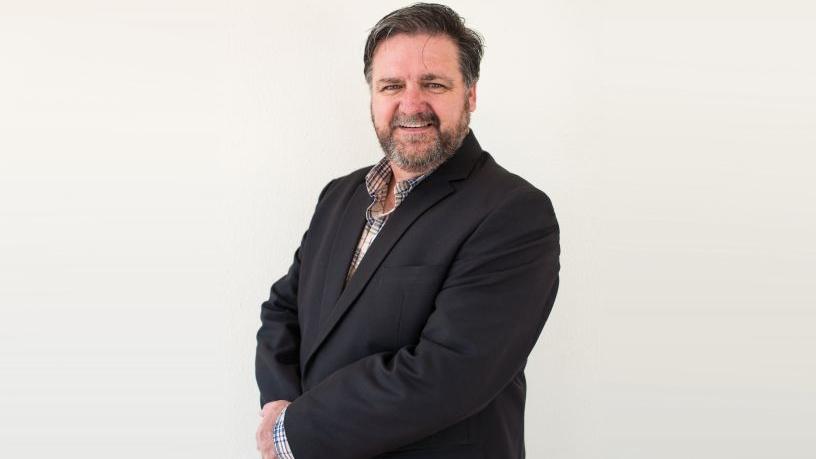
As machine learning and artificial intelligence take off, they are already solving problems that we didn't even realise were problems. Since machine learning is essentially about machines writing their own future algorithms, we as humans are merely spectators in this brave new world.
So says Willie Strydom, enterprise security architect at Wesbank, who will be a panelist discussing, 'AI: Good, bad fad?' at the Meeting of Minds: ITWeb Artificial Intelligence 2018, to be held on 1 August at The Forum in Bryanston.
These technologies are also creating exciting new opportunities, he adds. "Consider voice recognition apps that can translate into different languages, and how much easier they would make international travel. Moreover, think of the elderly or disabled and the new voice interfaces they can use that will have natural language-recognition capabilities."
According to Strydom, in the same way as the Web opened new possibilities for us, such as online shopping, 24-hour banking, and real-time parcel tracking, to cite a few simple examples that we all take for granted today, so will our future selves look back to 2018 and wonder how we ever managed without AI.
Little room for individualism
In terms of how AI will benefit business, he says, unfortunately, over the years, enterprises have reduced humans to process-driven individuals, with little room for individualism and creativity.
"Take a data capture clerk, call centre agent or help desk person. We give them a script to follow, that they cannot deviate from. Those types of process-driven roles can be done very easily by robotic process automation these days. And they can multi-skill. Call centre operator by day, data capturer by night."
However, he stresses that it doesn't have to be such a big leap from zero to 100 in one go. "Think back to a few years ago, when all big companies had multiple switchboard operators to answer phones and transfer calls. Today, that is unheard of. Again, it has been a subtle, but very real shift."
Jobs will be lost but new jobs that we cannot yet imagine will be created. "Consider all the roles that simply did not exist a mere 15 years ago, anything in social media, app developers and so much more. "
Speed of change
On the flip side, he said, with AI, the biggest danger is the speed of change. "During the Agricultural Revolution and Industrial Revolution changes took lifetimes to develop. Today, the changes are happening in decades rather than centuries."
Strydom says the challenge will always be for us to keep up, and remarkably we do. "Five years ago the job title of data scientist didn't exist. Today, it is one of the most sought-after roles in IT, and there are people filling those roles. Sure, there are not enough of them, but give it two years, and it will be just another role in IT."
What is key here, he says, is that we as individuals must constantly change and adapt, but so must we as companies. "When disruption happens, it happens fast. I'm always reminded of the fact that the same month Kodak declared bankruptcy, Instagram was bought by Facebook for $1 billion."
The future is very bright and exciting, he concludes. "Scary and, yes, there will be some bodies along the way, but looking at the big picture, exciting."
Share

