
Increased volumes of data traffic and the introduction of new applications are placing pressure on IT infrastructure.
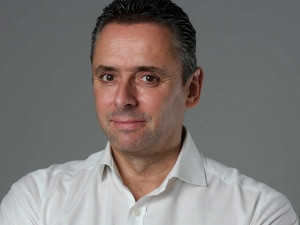
Paul Steven Coates, Riverbed Technology's regional VP for the UK, Ireland, SA and the Nordics, and Christo Briedenhann, country manager for Riverbed Africa, sat down with ITWeb last week to discuss how new developments in the IT space are placing strain on IT infrastructure.
In SA, one of the biggest IT-related challenges is a lack of adequate skills, as more and more IT professionals leave the country, said Briedenhann, noting that the cost and availability of adequate bandwidth also serves as a barrier across the African continent.
According to Briedenhann, these hurdles make it important for organisations to implement strategies to improve the performance of their IT infrastructure, which results in lower bandwidth usage and reduced costs.
"Faster and more content-rich applications are driving the requirement for bandwidth, which puts pressure on IT infrastructures. The cost of infrastructure can be a real roadblock for businesses looking to expand operations, particularly in Africa, because of the high cost and limited availability of resources," added Coates.
Last year, the International Data Corporation (IDC) conducted research on infrastructure return on investment (ROI) based on the experiences of Riverbed customers. Riverbed Technologies has been active in Africa for the past seven years and the IDC found that customer ROI when using Riverbed was even faster in Africa than it was across other regions, said Briedenhann. The research found that customers were able to reduce IT costs, improve IT staff efficiency, increase availability for users, and trim time to market with new revenue-generating opportunities, he added.
As workforces become more mobile, the need for easy and reliable access is essential, said Coates. "The trend towards enterprise mobility means organisations want to be able to get the data and the applications out to their mobile workers without any problems. In order to do this, the applications have to be secure and they have to perform when you need them to," he said, pointing out that this is only viable when the organisation's IT infrastructure is performing at an optimal level.

This mobility trend also increases the need for all processes in the organisation to be faster, said Coates. "There is a need to do things better, quicker, faster." In line with this, Briedenhann advised that organisations move away from buying more and more hardware, and rather look to consolidate the technology they already have and to make it more efficient.
Within the IT space, both Coates and Briedenhann agree that the market is continuously moving towards consolidation, both globally and in Africa. "There is a need to draw into the centre as much as possible, which simplifies managing a widely distributed organisation," said Coates.
Over the years, there has been a back and forth between a centralised and decentralised approach to IT infrastructure, noted Briedenhann, adding that the current trend is moving towards a more unified approach.
"Ultimately, from an IT operations perspective, businesses should always be looking at how they can do more with less," concluded Coates. "Businesses must remember that technology is only beneficial if it creates tangible business value."
Share

