
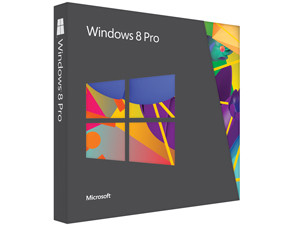
Software giant Microsoft has opened up for pre-orders for its latest operating system ahead of next Friday's launch. It is expected to spend almost $2 billion marketing the software - making it the biggest product launch ever.
Windows 8 - which comes three years after the group's successful Windows 7 product - is arguably the most important release for the behemoth, as PC sales slump and the group fights to fit in with a new era in which smartphones and tablets are leaving desktops and laptops behind.
Windows 8 has been hailed as a major step for Microsoft, as it completely revamps its traditional operating system design and user interface. The new system is being designed to create a cohesive user experience across all devices.
Microsoft, which recently reported its worst ever quarter since going public, is reportedly set to spend between $1.5 billion and $1.8 billion on launching Windows 8. Forbes.com says this will make it the biggest product launch in the history of the industry, dwarfing the $200 million Microsoft spent to market Windows 95.
Limited offer
On Friday, Microsoft said customers could reserve copies of Windows 8 Pro and start pre-ordering Windows 8 DVDs. The group is offering a launch upgrade special from next Friday for those who want to log in using the upgrade assistant.
The online upgrade costs $39.99 and is valid until the end of January; it is supported in 140 countries worldwide, with 37 languages and 23 supported currencies. "You will want to upgrade your PC to Windows 8 Pro sooner rather than later," says the company.
Microsoft says, as the launch rapidly approaches: "A new wave of tablets, convertibles, hybrids, notebooks, Ultrabooks and all-in-one PCs are set to hit the shelves later this month." Consumers who want to reserve a packaged DVD of the upgrade to Windows 8 Pro will pay $69.99, and pre-loaded PCs can also be reserved.
End-users who buy an "eligible" Windows 7 PC between 2 June and 31 January can upgrade for $14.99.
Big hopes
Windows 8 is a core product for Microsoft, which recently reported a worse quarter than expected - its worst three-month period since going public in 1986 - as it took a hit from a failed deal and saw lower profit from its flagship offerings as PC sales stood still.
Vesact analyst Sasha Naryskine says Microsoft needs to try and recapture its "haters" in a period when consumers are moving rapidly to tablets and smartphones. Gartner recently said that global PC shipments dropped 8.3% year-on-year in the third quarter.
Naryskine says Microsoft really needs to move the new operating system off the shelves. He explains that Microsoft's previous releases have been subtle upgrades, but Windows 8 is more than a subtle change at a time PC sales are dropping and tablets are capturing people's imaginations faster than expected.
Microsoft is set to release the system the day after Apple reports its latest results, which will provide the market with insight into just how quickly tablets are flying off shelves, says Naryskine.
Naryskine gets the sense that Windows 8 is more important than any other release in the past, and that the company is aware of this. He says "in the short-term, this is huge".
If Microsoft has another weak launch, like the catastrophic Vista system, people will ask serious questions about the company. The group's share price is already coming under pressure as investors rate Google as a more attractive share.
Slow to go
Gartner has already predicted that Windows 8 will not move the desktop sector and 90% of businesses will bypass its initial deployment. Senior VP of research, Peter Sondergaard, says Microsoft has challenges ahead, and however good it sees its prospects with Windows 8, it will not move the desktop market.
A lot of organisations do not see the business value in migrating immediately and would rather wait for the next version, as they do not have the appetite for risk, he notes. Sondergaard adds that consumers will adopt the upgrade. "You just don't jump into things with both feet immediately."
Windows 8 will be taken up by tablets and phones, which will get an optimised interface, says Sondergaard. Gartner expects that Windows 8 will take third place behind Apple's operating system and Android.
Windows 7, launched in 2009, outsold every other previous version within a month of its release, with two sales for every one of any other operating system. The launch of the software signified Microsoft's closing the door on the Vista period, which Microsoft SA MD Mteto Nyati said had been a "bad time in the company's history".
Share

