
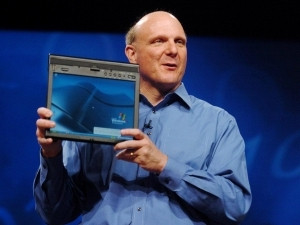
Microsoft's $40 billion sweetener to investors, announced yesterday, is seemingly not having the desired effect, as its share price failed to gain momentum.
The software giant, which recently said it would buy Nokia's flagging device unit for EUR5.44 billion, has increased its dividend payout by 22% and will buy back shares worth $40 billion.
The move comes as Microsoft is set to meet analysts tomorrow, as the market waits to see who will replace outgoing CEO Steve Ballmer and what it will do with Nokia. The repurchasing programme is worth between 10 and 12 quarters of its current cash generation levels at current run rates.
"These actions reflect a continued commitment to returning cash to our shareholders," said CFO Amy Hood in a statement.
However, the move did not please the market, as Microsoft's share price only gained 0.39%, underperforming the Nasdaq, which closed 0.75% higher, notes Vestact analyst Sasha Naryshkine.
Better options?
Naryshkine says, at current levels, Microsoft's dividend yield is 2.8%, which will now be boosted to 3.4%. He adds that investors expected Microsoft to make the move and it has increased its dividend eight times since 2004.
Buying back and retiring shares is earnings enhancing as it trims the number of shares in issue, says Naryshkine. He notes, however, that investors do not want to pay more than 12 or 13 times for the stock.
Naryshkine adds that Apple is trading at a 10% discount to Microsoft, and Google may be a better buy as well, despite not paying out dividends and trading at a 25 times multiple, making it expensive. He says 80% of all hardware sold in the last 18 months runs on Android, and people will buy fewer PCs for home use when they can get a tablet.
IDC expects the global PC market to decline by 9.7% this year as mobile devices continue to explode at the expense of PCs. "The market as a whole is expected to decline through at least 2014, with only single-digit modest growth from 2015 onward, and never regain the peak volumes last seen in 2011."
Wait and see
Microsoft has been accused of being tied to its legacy and of failing to innovate and keep up with changing trends.

One of Microsoft's most prominent failings in recent years was its inability to gain traction in the tablet sector as its Surface tablet has failed to impress. This problem has been laid at the feet of Ballmer, whose surprise resignation saw Microsoft's shares climb.
Its purchase of Nokia's device unit is seen as a way of making inroads into the tablet and smartphone sector, and solving its mobile dilemma.
Microsoft needs to continue returning money to shareholders to attract a better valuation, notes Naryshkine. He says it is trying to keep investors happy, as people are still trying to figure out how it will all turn out.
Although Microsoft's sales have been "anaemic" and its gross profit held the same level for the past three years, the company is generating between $3 billion and $4 billion in cash a quarter, says Naryshkine. The buyback translates to about 10 to 12 quarters of cash at the current run rate, he explains.
Naryshkine says the company is generating enough cash to pump money into Nokia and give returns to shareholders. Microsoft expects its Nokia deal to add to its bottom line in 2016 and operating income from the unit will break even when smartphone shipments move beyond 50 million.
The software giant anticipates a worldwide smartphone market of 1.7 billion shipments by 2018, and anticipates having 15% of that. This will give it revenue of about $15 billion.
Share

