
Technology has the potential to solve our continent's biggest problems and, despite challenges, Africa has a host of advantages it can leverage to drive innovation and attract investment.
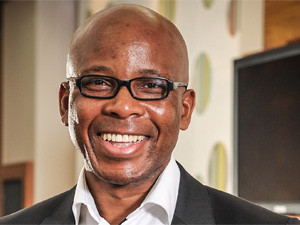
This is according to Microsoft SA MD Mteto Nyati, speaking about how ICT can transform business and government at a CIO gathering, co-hosted by Telkom Business and Accenture, this week.
Nyati says Microsoft has a vision for SA - and Africa at large - where innovation, world-class skills and affordable access have the potential to transform society. "We want to do business, but we also want to do good. We have within our means the ability to drive affordable access and innovation."
Africa, he says, is being eyed by "many hungry companies" and - while there is vast potential and opportunity in Africa, those closest to the continent's problems need to step up and work together to transform the continent.
"There is not much innovation coming from us [as Africans]. We are largely consumers of other people's intellectual property and we need to change this.
"We cannot wait for others to come solve our problems, and to make money out of our problems. We are closest to the problems, so we must ourselves come up with solutions to address them."
African perspective
The Africa agenda, says Nyati, is a big one - and it is "everyone's duty". First, he says, companies and governments have to consider what the current environment in terms of economy, infrastructure, technology and people looks like. "A great strategy has to be underpinned by an honest assessment of our reality."
In terms of economy, he says Africa boasts seven of the top 10 fastest growing economies in the world. "We are seeing rapid urbanisation and there is opportunity in both the public and informal sectors in Africa."
He notes that affordability, however, remains a key challenge. "As Microsoft, we are not competing with companies like Telkom, but if we can bring the technology to the continent, then Telkom can drive the cost down. In SA and Africa."
Nyati says, although Africa's infrastructure in cases leaves much to be desired, the lack of adequate infrastructure is leading to creative solutions of delivering services. "There is a growing demand for reliable infrastructure, connectivity, electricity and housing."
He notes further challenges include strict border control - which is limiting trade - and inadequate terrestrial connectivity.
Technology-wise, Nyati says Africa is mobile. "Mobile phones [represent] the first computer to many Africans and new markets are being created because mobile broadband is increasing Internet penetration."
The continent has an advantage in that its countries are not constrained by legacy systems. "There is also ongoing investment in undersea cables."
As far as people go, Nyati says, while skills are in short supply, they are "becoming abundant". The continent's large youth population, he says, means an increased workforce in the future.
Success stories
Nyati points to some of the continent's success stories to illustrate the potential the continent - and its people - hold.
One such story is the City of Cape Town's commuter mobile app. The city was presented with a challenge, and it used technology to find a solution, he says.
The challenges: there are dispersed places to get information on schedules; commuters do not know how to move between the different modes of transport; various transport systems are running on different platforms that do not speak to one another; and public transport is inadequately serving commuters.
The solution: a mobile app that brings all information from different modes of transport together and integrates all functions needed to run a transport entity on a single platform - including tracking, route planning and traffic schedules. The app serves to minimise operator corruption as it allows analytics to see how they serve the commuters, Nyati points out.
Nigeria - another rapidly growing ICT market - is another such case.
The challenge: the Nigeria Federal Ministry of Health is unable to track the progress of its projects and programmes, having to rely on manual records, which are inconsistent and unreliable.
The solution: an electronic records and project management system, including an e-health dashboard. Management information system functionalities offer a bird's-eye view on project status for executives within the ministry - increasing efficiency, reducing costs and improving operations and services.
In Zimbabwe - often perceived as a retrograde market - the Zimbabwe Revenue Authority has also implemented a technology-centric solution.
The challenge: ineffective revenue collection from the informal sector; manual and mundane clerical work by tax assessors; manual tax assessments are easily influenced by corruption; and an inability to track and recover lost revenue from tax evaders.
The solution: an e-services portal in the public cloud to enable electronic submission and self-assessment of taxes, which uses business intelligence tools to analyse and have a 360-degree view into the history of taxpayers. The authority moved its entire workforce to automation and electronic submissions and processing eliminated the opportunities for corruption.
Share

