
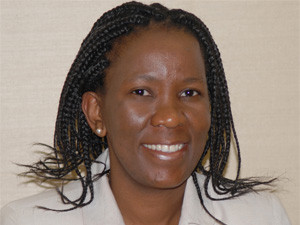
Communications minister Dina Pule is "surprised" that etv has taken her May decision to appoint Sentech to handle decoder controls to court, because all the stakeholders have been working together.
Last month, the free-to-air broadcaster filed papers against Pule, challenging her decision to have state-signals provider Sentech handle conditional access controls for set-top boxes. Etv wants the court to overturn her decision on the basis that it is illegal.
The matter is set to be heard on 16 October, about a month-and-a-half before digital TV is set to go live commercially across around two-thirds of SA, and could delay the launch, as etv argues the matter must be sorted out before migration can start.
About 11 million houses will need decoders to convert digital signal for viewing on analogue sets. The state will subsidise about 70% of the cost of five million boxes.
Shocking news
However, communications DG Rosey Sekese says the suit came as a surprise as the minister's view is that her original May appointment of Sentech has been overtaken by events and that the affected parties were acting in the spirit of co-operation.
In an affidavit filed before the court, Sekese says there have been negotiations and discussions since the May decision around the issue of conditional access.
"In this regard, the minister is surprised by this application, which seems to be aimed at taking technical legal points probably at the expense of digital migration, with the risk that SA may be bogged down in legal battles and failing to meet its deadline in terms of its international commitments."
Sekese points to a letter from the SABC to Sentech in August saying it and etv were in favour of Sentech managing controls, as long as the current system was upgraded to version three.
The purpose of the control is to stop boxes from being sold outside SA, as they can be disabled, and allow the decoders to be recoded for export purposes and allow for remote software updates.
Working together
Sekese notes that the department had consulted with stakeholders over the issue and a conference was held last year. However, when Pule took over as minister, little progress had been made towards meeting the timelines for launch, and a service provider for controls had not been appointed by the South African Broadcasting Corporation (SABC) and etv, writes the DG.
Sekese says Pule's May instruction to Sentech to handle controls was addressing the fact that the SABC and etv had failed to do so, and seeking to solve the time issue by asking Sentech to handle conditional access.
The conditional access system that the department tasked Sentech to handle was only intended to be implemented in the five million subsidised boxes, says Sekese. Etv and the SABC are welcome to implement their own control system at their cost, she adds.
Sentech, which is already running a conditional access system, has the experience to implement the controls for the boxes at a lower cost and in less time, says Sekese. The signal provider is prepared to upgrade the existing software to include both the current satellite offering, as well as terrestrial decoder functionality.
Etv has argued that Sentech's control system is fallible and has been hacked before.
Got the power
Sekese also argues that the minister has the power to choose any company to manage issues that deal with international commitments, and so her decision to appoint Sentech was legal.
International agreements are provided for in the Constitution and all agreements by member states of the International Telecommunications Union bind SA as a result of the department's constitutional powers, says Sekese.
Sekese also states that decoders need to be open to "government information," which requires that the boxes cannot exclusively be controlled by free-to-air broadcasters.
Share

