

South African companies are increasingly struggling to demonstrate a meaningful return on investment (ROI) from their social media marketing investments.
This is prompting many firms to shift their focus from revenue-driven key performance indicators (KPIs) to softer measures, such as using social media for brand awareness, engagement and customer sentiment.
This is according to Arthur Goldstuck, founder of research consultancy World Wide Worx, who presented the findings of the 2026 Social Media Landscape Report during a recent webinar.
Conducted by market research firms Ornico and World Wide Worx, in partnership with Ask Afrika, the 16th edition of the report shows SA’s social media landscape reflects the shifts in how people engage online.
The report, based on a survey of more than 100 of SA’s largest brands, shows that while 69% of surveyed organisations believe social media delivers ROI, proving this remains unfeasible. More than a quarter of respondents remain uncertain whether their social media activity is generating measurable business value.


According to Goldstuck, the report shows that while social media remains central to corporate marketing strategies, organisations are operating in a far more disciplined environment, where every rand spent is coming under greater scrutiny.
Budget constraints, limited resources, changing platform algorithms and a lack of executive understanding are making it harder for marketers to demonstrate a clear ROI.
“The findings point to a social media environment that is becoming considerably more disciplined than in previous years,” he explained.
“Companies are no longer investing simply to maintain a presence across every available platform, but are instead demanding stronger evidence that those investments contribute to broader business objectives. That places significantly greater pressure on marketing teams to justify expenditure with measurable outcomes rather than activity alone.
"The reality is that organisations are now balancing tighter budgets with growing expectations from management. At the same time, marketers have to contend with rapidly-changing algorithms, expanding artificial intelligence (AI) capabilities and increasing demands for content across multiple platforms. Demonstrating meaningful return on investment has therefore become substantially more complex than simply measuring reach or engagement."
More with less
The report identifies structural challenges limiting social media performance, with 40% of respondents saying they lack sufficient time to manage social media channels effectively, while 38% cite budget limitations as a major obstacle. Another 30% point to insufficient executive understanding of social media's strategic role, while a further 30% identify constantly changing platform algorithms as a significant barrier.
“These findings suggest that marketers are facing increasing pressure to deliver stronger business outcomes despite having fewer resources and operating in an environment where platform performance is becoming more unpredictable,” notes the report.
While AI is now embedded in most organisations’ marketing operations, technology alone is not solving these challenges, it adds.
According to the study, 73% of surveyed organisations now use AI, while 69% use AI-powered search and chat capabilities. ChatGPT remains the dominant platform for content creation, although Anthropic’s Claude has recorded the fastest growth among AI tools.
This shift reflects a broader evolution in social media marketing, where success is increasingly determined by strategic planning, organisational alignment and internal capability rather than simply increasing publishing frequency or adopting new technologies, it states.
“Success from social media campaigns increasingly depends on combining technology with human judgement, strategic planning and skilled execution rather than assuming that more platforms, more content or more automation will automatically deliver better business results,” Goldstuck added.
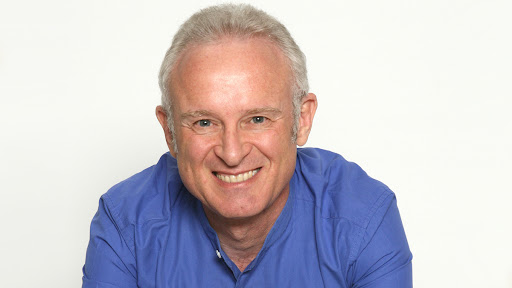
Goldstuck said marketers are increasingly abandoning traditional revenue-based performance measures because they are becoming harder to attribute directly to social media campaigns.
He noted that marketers have previously relied heavily on engagement metrics, but these often failed to demonstrate whether campaigns generated genuine business outcomes.
"There was a time when it was all about engagement; for example, how many likes you got and how many views you got. What that hid away was the extent to which budget was being thrown at exactly getting those or achieving those measures. If you're spending to get the likes and the comments and the follows, it truly is a vanity metric."
According to the report, improved brand awareness remains the most frequently cited benefit of social media marketing, while sales, market share and brand loyalty have all declined as reported outcomes.
Goldstuck questioned whether brand awareness is being used as a substitute for measurable commercial returns.
"My gut feel is that it is the easy way out. You can claim brand awareness if you can't prove actual return on investment. Those sales numbers are dropping, and they tell you why return on investment is a dodgy question for corporate social media spend.
"Looking at the trends over the years, we've seen that when you can't measure ROI, you tend to look at other metrics that you can measure and that sound impressive.”
Budget pressure
The report shows companies are becoming more cautious with current spending, with 40% of marketers now citing budget constraints as one of the biggest barriers to effective social media marketing, up sharply from 28% a year ago.
Sixty percent of organisations now spend less than R10 000 per month on social media advertising, up from 53% in 2025, while the proportion spending more than R50 000 has fallen from 23% to 16%, the report reveals.
Only 23% reported increasing their current budgets. However, more than half (54%) intend increasing social media investment during the coming year, while 55% also plan to allocate funding towards new marketing technologies.
“The findings indicate that companies are not abandoning social media marketing but are becoming considerably more selective about where and how they invest, with greater emphasis on technologies and activities capable of demonstrating measurable business value,” Goldstuck commented.
Rather than signalling reduced confidence in social media, the findings suggest companies are placing greater emphasis on accountability and measurable outcomes as digital marketing continues to mature.
Engagement metric
Despite tighter spending controls, companies continue to refine their social media strategies.
LinkedIn has strengthened its position as the most widely used corporate platform, increasing from 85% of companies in 2025 to 88% in 2026, the report finds.
Facebook remains widely used despite declining from 83% to 79%, while Instagram slipped from 73% to 69%.
WhatsApp recorded one of the strongest gains, rising from 45% to 57% as businesses increasingly use the platform for customer communication.
YouTube declined from 63% to 50%, while TikTok dropped from 47% to 37%, although 68% of organisations still plan to invest in short-form video content.
The report also found growing emphasis on community engagement, with participation in online communities increasing from 48% to 61%, while two-thirds of respondents now say they understand the influence these communities have on their organisations.
“Posting habits have also become more varied, with daily publishing increasing but monthly publishing also becoming significantly more common, suggesting companies are tailoring content strategies to individual platform requirements rather than following a uniform publishing schedule,” the report concludes.
Share

