
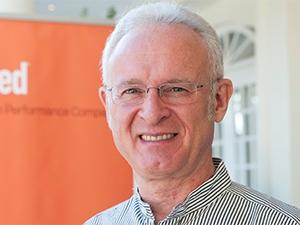
Disruption has always been with us, if you look at any year in the 20th century, you will find there was some form of disruptive technologies. However, disruption is a big term today because everything is connected.
So said Arthur Goldstuck, World Wide Worx, speaking at the Riverbed Force for Business Forum organised by ITWeb yesterday. Goldstuck, who once led early research into the Internet user population and the extent of Web commerce in SA, pointed out the Internet of things (IOT) is becoming an animal that is changing the way organisations think.
He added there is one very big change that is happening right now and that is the systems are becoming faster and faster. This means the ability to connect disparate sets of data is also getting faster.
"Human connectivity across the globe has become intense, in 2010 there were certain continents that were exceptionally well connected such a Western Europe, North America and South East Asia.
"In SA connectivity was only around Gauteng, in Africa it was in Nigeria, Lagos, and in Kenya connectivity was only across the Rift Valley," he revealed.
Three years down the line, in 2013, he elaborated, those areas that were connected were suddenly hyper connected, and vast new areas were now being connected such as the coastline of Africa and India.
That changed everything, not only in terms of consumer use of the Internet and application, but also of business use, he noted.
Suddenly businesses had this massive infrastructure, this incredibly powerful tool called the Internet, but they had nowhere to hide because if they were not using this tool, they were being left behind by customers, he went on to say.
Internet growth
Discussing the growth of connectivity in SA, Goldstuck said a year from now there will be a massive amount of data available in the working environment, the business environment and in the infrastructure environment that will be analysed, shared and used for decision-making.
Internet use, predominantly though smartphones, will form a huge part of this data, he observed.
"Smartphone use among South Africans has grown tremendously, by the end of last year more than half of SA adults were using smartphones.
"By the end of this year more than half of all South Africans will be using smartphones, it's estimated that more than 29 million smartphones will be in use by end of this year," he revealed.
He added this means we will have half of the population who will have this powerful tool in their hands, through which they can have access to information, share information and demand response from businesses.
"The only buffer is that a high proportion of these new smartphone users are not yet Internet users because the cost of data is too high. Until the ceiling costs of data comes down that means a lot of the smartphone users will be left out of the Internet economy," he noted.
But gradually, he reassured, they will also enter this environment because we are starting to see a proliferation of free public WiFi emerging across SA.
As these networks proliferate over time, he explained, everyone who has a smartphone will have access to the Internet, by the end of this year we will have 20 million Internet users in SA.
"This is massive, for Internet growth in SA; however there is a misconception that this population is the target market for any business which is serving a customer base via Internet.
"But these Internet users are not yet a target market for Internet marketing as it takes consumers an average of five years of Internet use before they become online shoppers. This is because an average person is terrified of placing an order online and spending their money online," he remarked.
When we hear of mobile commerce exploding because of smartphone growth, this is not true, they are merely using hype, he said. He explained this is because a new smartphone user is terrified of the smartphone environment and also of the Internet environment. This automatically translates to them being even more afraid of the online shopping environment.
Out of the 20 million people who are connected to the Internet in 2016, only around 8.5 million have already been connected for five years or more, he explained.
"2016 will see the beginning of a rapid acceleration of experienced users online and that acceleration doesn't end until the end of this decade.
"These are experienced Internet users who will use the Internet actively and make massive demands on businesses over the next five years," he said.
Businesses will have to scale up and smarten up dramatically to meet this demand, he concluded.
Share

