I am not a 'car guy'. Yes, I do watch Top Gear and yes, I can appreciate a great sports car and ogle at the new Jaguar F Type, but I am far from a being a horse-break-power-6-cylinder-what-you-may-callit petrol head.
I drive a car and when something goes wrong, I do like most people. Stop. Lift the bonnet. Make sure the engine is still there, and then have the AA on speed dial.
If that is the case, then why do I keep my eye on the Frankfurt Motor Show?
Besides the pretty girls standing by each vehicle, the motor show has a geeky-tech side to it. I find it interesting just how much technology is taking over the humble motor vehicle, as it evolves into much more than just being able to play your latest 'Miley Cyrus Stripper Twerking' video on the entertainment system, and make broken Bluetooth phone calls.
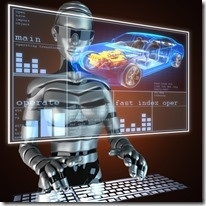
Motor vehicles are becoming mobile computing powerhouses - on wheels. And this tells me something about how our future is shaping out to be.
From the comfort of my office chair, I have been following stories coming out of this year's Frankfurt Motor Show, which is currently under way, and already I can see two technology-related trends that seem to be growing stronger every year.
Electric is the future
If you are thinking that electric and hybrid cars are slow and ugly go-karts, then you are very much mistaken. Electric vehicles have evolved from their early, clumsy days into serious and powerful machines that will outpace modern sports cars - and still run on a battery.
This year, it seems every automaker has some electric or hybrid vehicle in the making. Even though the battery power is still a major expense of an electric vehicle, and even though people still have a real fear of running out of power and being stuck, this is the future of our transport and companies are on board to make it so.
Manufacturers are now confident in the technology and are ready to begin commercially producing these vehicles for the public. After my BMW hybrid and electric experience, I am looking forward to seeing the BMW i3 in South Africa soon!
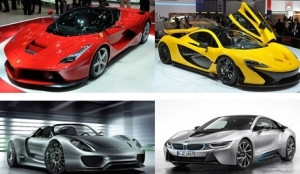
When you throw around names like BMW, Ferrari, McLaren and Porsche into the mix, you know you have power under the hood and beauty to match.
Besides the cars-and-people-must-smoke-less emissions regulations that have been placed, manufacturers understand that petrol and diesel are becoming more and more expensive and they need to provide an alternative. The electric technology is maturing, and it is just a matter of time before these electric vehicles become the norm rather than the exception.
Elon Musk was the first to pioneer the all-electric supercar with the Telsa, but I am sure even he is now looking in the rear view mirror as others start to catch up.
Self-driving vehicles
When I lived in London, I 'drove' - and I use that term lightly - on the M25, which has been coined the world's largest parking lot. Imagine being able to get into your vehicle, tell it where you want to go, and then sit back to read the morning paper or fire up the laptop while the car drives itself to your destination. The stuff seen in movies!
Google's Self-Driving fleet of vehicles has been instrumental in pioneering the way for fully autonomous self-driving vehicles. Its fleet of at least 10 vehicles has traversed over 500 000km of intense driving conditions, from the insane streets of San Francisco's Lombard Street in heavy traffic, to being driven long distances over the Golden Gate Bridge and around Lake Tahoe.
Unfortunately, vehicle manufacturers are not keen to let Google muscle into the automotive playground, as I suppose they are afraid of being taken over, like Google did in the computing world. Therefore, vehicle manufacturers such as Lexus, Audi and Mercedes are experimenting with their own driverless vehicles.
While it is still some time away before we are able to buy one, the learning and data analysis that companies glean from their continuous driverless road tests and experiments inches us closer to that day.
There is even talk of Google creating the world's first Robo-Taxi, which is a driverless taxi service for commuters - so perhaps the other manufacturers are correct in their be-wary-of-Google approach...
While not every manufacturer is ready to go "full auto", most are investing in automatic-safety technology. These systems include collision avoidance, safe lane-changing detection, driver alertness detection, self-parking abilities and automatic braking. All of these will make us better drivers and reduce the carnage that is on our roads.
So, the direction seems clear. Cars that will drive themselves, park themselves, run on electricity that they will find while we sit in meetings is the way things are heading.
Now, if we can only get Eskom to keep the lights on long enough to just read about these - that would be a good start!
* Images by Shutterstock.com
Share

