

Shameel Joosub, CEO of Vodacom, South Africa’s largest mobile network operator, is the top telco earner this year, with a total income of R71 million, inclusive of various benefits.
Vodacom’s CEO is followed closely by MTN Group president and CEO Ralph Mupita. However, there’s a caveat when it comes to comparing remuneration for the telecoms bosses: MTN’s 2025 annual report isn’t out yet, so we only know what Mupita earned last year.
ITWeb pulled numbers from the latest annual reports for the highest-value telecoms companies on the JSE to see what their CEOs earned in their most recent financial year.
Following MTN’s CEO are those of Telkom, Blu Label Unlimited and then Cell C, in order of market capitalisation. There’s another caveat here – we don’t know what Cell C CEO Jorge Mendes earned because the company is a newborn on the JSE and has yet to issue an annual report.
Cell C is included in the list because its market capitalisation makes it the fifth-largest telecoms company on the JSE.
In total, excluding Mendes, the top CEOs of these companies − which are worth R611.7 billion on the JSE − earned R224.9 million in the most recent financial year. This is out of 435 companies listed on the JSE as of July 2025, which have a collective market capitalisation of R21 trillion, according to Wikipedia.

Ralph Mupita – MTN – R64.8 million


Mupita’s remuneration, which is determined against several metrics of which performance is key, was 19.4% lower than in 2024 given that no long-term incentives (LTI) vested during the year.
This comes as MTN Group notes in its latest annual report that it delivered solid operational performance in the financial year to December last year “against the backdrop of a persistently complex macro-economic and regulatory environment across several of our markets”.
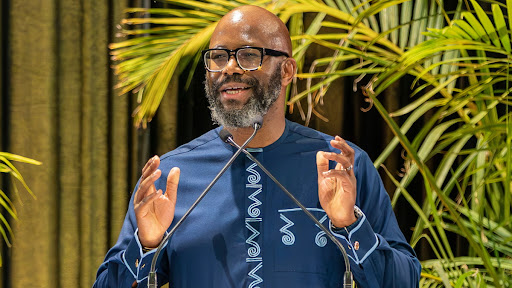
Its latest results for the third quarter to September show that revenue decreased by 18.5%, while data revenue declined 15.3%, with MTN saying it is navigating challenging macro and regulatory conditions in the 17 markets in which it operates.
It did, however, improve its subscriber base by 1.6% to 288 million, while active data subscribers went up by 7.4% to 152.8 million.
MTN invested capex of R19.8 billion in its networks and platforms, reflecting capex intensity of 14.7% – compared with the medium-term target range of 15% to 18%.
Shameel Joosub – Vodacom – R71 million
Joosub’s remuneration is tied to several of Vodacom’s metrics, as well as gross pay, which is adjusted for inflation each year. Vodacom notes this pay is benchmarked against the rest of the industry, considering the role’s size and complexity.
The operator also considers job-specific competencies, skills, industry knowledge and experience that contribute to achieving Vodacom’s strategy.

Beyond gross earnings, Joosub earned his income against how well the business performed. In the telco’s year-end results to March, Vodacom’s revenue was up 8.3% (7.4% when stripping out currency fluctuations) to R98.3 billion.
The company also added 8.2 million customers to serve a combined 123.7 million clients across the group, including Safaricom.
For the year, Vodacom declared a final dividend of 410cps. For SA, Vodacom reported strong full-year results, buoyed by double-digit data usage growth.
However, Peter Takaendesa, chief investment officer at Mergence Investment Managers, has noted: “SA operations are likely to weaken… over at least the coming few quarters.”
Serame Taukobong – Telkom – R33.9 million
Taukobong’s remuneration is, like his peers’, also linked to the company’s performance and how well he met his key performance indicators.
The company also sees its remuneration policy, which it changed in the 2025 financial year, as “a critical part of our employee value proposition, enabling the group to mitigate people risks while embedding a high-performance culture”.
Among Telkom’s considerations is a fair-pay policy to ensure its remuneration structure aligns with its values, meets its business objectives, and satisfies stakeholder expectations in a sustainable manner.

In the year to March, Telkom – which recently rebranded – reported earnings before interest, taxes, depreciation and amortisation up 25.1% to R11.8 billion off the back of group revenue that rose by 3.3% to R43.9 billion. It declared a special dividend of 261c a share.
At the time it published its results – June this year – it said the results reflected sustainable momentum in the group’s underlying operational performance as it sets ambitious yet achievable objectives for the next three years, underpinned by the OneTelkom approach.
Brett & Mark Levy – Blu Label Unlimited – R27.6 million each
The Levy brothers’ 2025 income calculation strips out LTIs that have not vested, according to the annual report for the year to May.
BLU – as it is now commonly known – benefited from Cell C’s first year of profitability, with its annual results booklet showing Cell C’s contribution drove a 281.5% increase in earnings per share (EPS) and a 519.17% rise in headline EPS (HEPS), based on ITWeb calculations using the per-share figures provided.

Excluding Cell C, EPS still grew 262%, while HEPS gained around 260%, according to the results booklet. Group revenue came in at R14.1 billion, while gross profit rose 2% to R3.375 billion, with margins improving from 22.57% to 24.02%.
BLU reported positive headline earnings adjustments of R1.585 billion, attributable to the reversal of the group’s share of historical impairments recognised by Cell C of R3.144 billion, partly offset by the reversal of the previously recognised impairment of R1.559 billion.
Finally succeeding in its bid to buy all of Cell C in September, BLU spun the mobile operator out last month through a JSE listing. Although it has subsequently repositioned itself to get away from the telecoms moniker, it remains listed in that category on the bourse.
Jorge Mendes – Cell C – yet to be disclosed
Having just listed on the JSE, Cell C has yet to issue results. However, its pre-listing figures for the year to May, as published by BLU, indicate the company has finally turned a profit, having been loss-making since launch in 2001.
The pre-listing information ahead of its 27 November debut on the bourse gives substantially more in-depth figures than previously released.

Its recently disclosed pro forma numbers show R3.5 billion in net profit from R13.7 billion in revenue. Cell C’s revenue for the first three months of the year was R2.8 billion, 1.7% growth from the previous comparative period. Meanwhile, EBITDA came in at R371 million.
It also had free cash flow of R255 million in the first quarter. BLU said at the beginning of the month that Cell C would pay its first-ever dividend at the end of its 2027 financial year.
However, any payout to shareholders will depend on factors such as the group’s performance, financial position, investment plans, capital needs and strategic priorities.
Share

