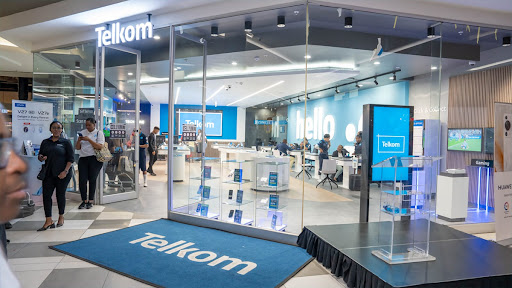
Megatel, part of the Hello Group, has commercially launched as the first mobile virtual network operator (MVNO) on Telkom’s network, introducing prepaid wireless broadband aimed at high-data users without access to fibre.
The launch also makes Megatel the first partner to go live on Telkom Business’s MVNO enablement platform, which allows companies to offer mobile connectivity under their own brands using Telkom’s network infrastructure.
The launch follows regulatory requirements introduced by the Independent Communications Authority of South Africa during the 2022 high-demand spectrum auction.
Operators awarded spectrum were required, as a condition of their licences, to provide open access to qualifying MVNOs. The requirements were intended to promote competition and broaden participation in the telecommunications sector.
Telkom is the last mobile operator in the country to launch an MVNO, following Cell C, MTN and Vodacom.


In a statement, Megatel says its service targets students, households in areas without fibre coverage and small businesses that need broadband connectivity without committing to monthly subscriptions.
It explains that customers use a portable wireless router with prepaid data bundles, allowing multiple devices to connect to a private WiFi network.
The offering has no fixed-term contract, debit order, credit vetting or early termination penalty.
All about control
According to Megatel, the model is intended to address demand for higher data volumes among consumers who cannot access fibre, or do not want the financial commitment associated with traditional fixed-wireless broadband subscriptions.
“Connectivity in this country is sold as a commitment. We think it should be a purchase,” says Leane Kruger, mission controller at Megatel.
“Prepaid is not a lesser product. It is control. You spend when you have it, you top up when you need it, and nobody debits your account in a month when the money isn’t there. That is how most of this country actually manages money.”
Kruger says the service is also designed for customers who need connectivity across different locations, including students, traders and small businesses.
The company says its target market includes spaza shops, salons, workshops, professional practices, and security and logistics operators that need connectivity for point-of-sale systems, staff WiFi and business operations.
It also sees an opportunity among businesses that already have fibre but need a backup connection during outages.
Telkom opened its MVNO enablement platform through Telkom Business to allow third-party brands to develop and sell connectivity services using its network.
An MVNO provides mobile services under its own brand, while relying on an established mobile operator's infrastructure. The model allows partners to manage their customer relationships and service propositions without having to build their own mobile networks.
Patrick Mac Namara, executive: wholesale and alternative channels at Telkom Business, says MVNO partnerships are part of the company’s strategy to extend connectivity to more customers through alternative distribution channels.
“MVNOs are an important part of how we are expanding access to connectivity and enabling more South Africans to participate in the digital economy,” he says.
“By opening our network to innovative partners such as Megatel, we are creating opportunities for businesses to develop propositions that respond to the diverse and evolving needs of customers.”
Mac Namara says Telkom expects the MVNO market to develop beyond conventional voice and data resale, with brands incorporating connectivity into broader services for their existing customer bases.
Telkom Business is also planning to extend the platform through OneTelkom, giving partners access to additional products and value-added services across the Telkom Group.
This will allow MVNO partners to combine mobile connectivity with other digital services, while retaining control of their brands and customer relationships.
Upwardly mobile
Megatel’s launch comes as South Africa’s MVNO market grows, with the segment accounting for about 3.7% of the country's mobile market at the end of 2025.
According to Africa Analysis, the market is forecast to reach approximately 14.4 million MVNO SIMs by 2030, representing 12.5% of the retail mobile market, according to figures cited in the announcement.
The market research firm says growth is increasingly being driven by businesses outside traditional telecommunications, including banks, retailers and insurers, incorporating connectivity into their customer offerings.
Telkom Business says it is working with additional MVNO partners, which are expected to launch once their preparations are complete.
For Megatel, the move to a full MVNO model is expected to give it greater flexibility to develop connectivity services around its existing customer base, while using Telkom’s network to deliver the underlying service.
Share